Introduction – Why Fast Water Extraction Matters After a Storm
Storm damage can affect a commercial property in minutes—but the effects of standing water can continue for days or even weeks if not addressed immediately. Across Florida, hurricanes, tropical storms, heavy rainfall, and severe wind events regularly expose commercial buildings to flooding, roof leaks, and interior water intrusion.
Once water enters a building, the damage can spread quickly. Flooring absorbs moisture. Drywall begins to weaken. Insulation becomes saturated. Electrical systems may be compromised. In many cases, what appears to be surface flooding can actually extend deep into walls, ceilings, and structural cavities.
Standing water creates immediate safety concerns, but it also threatens long-term building performance. Excess moisture can lead to mold growth, structural deterioration, damaged finishes, and disruptions to normal business operations.
That’s why commercial water extraction is one of the most important first steps after storm damage. Fast emergency water removal helps protect the building, reduce restoration costs, and get businesses back up and running faster.
What Commercial Water Extraction Involves
Removing Standing Water and Excess Moisture
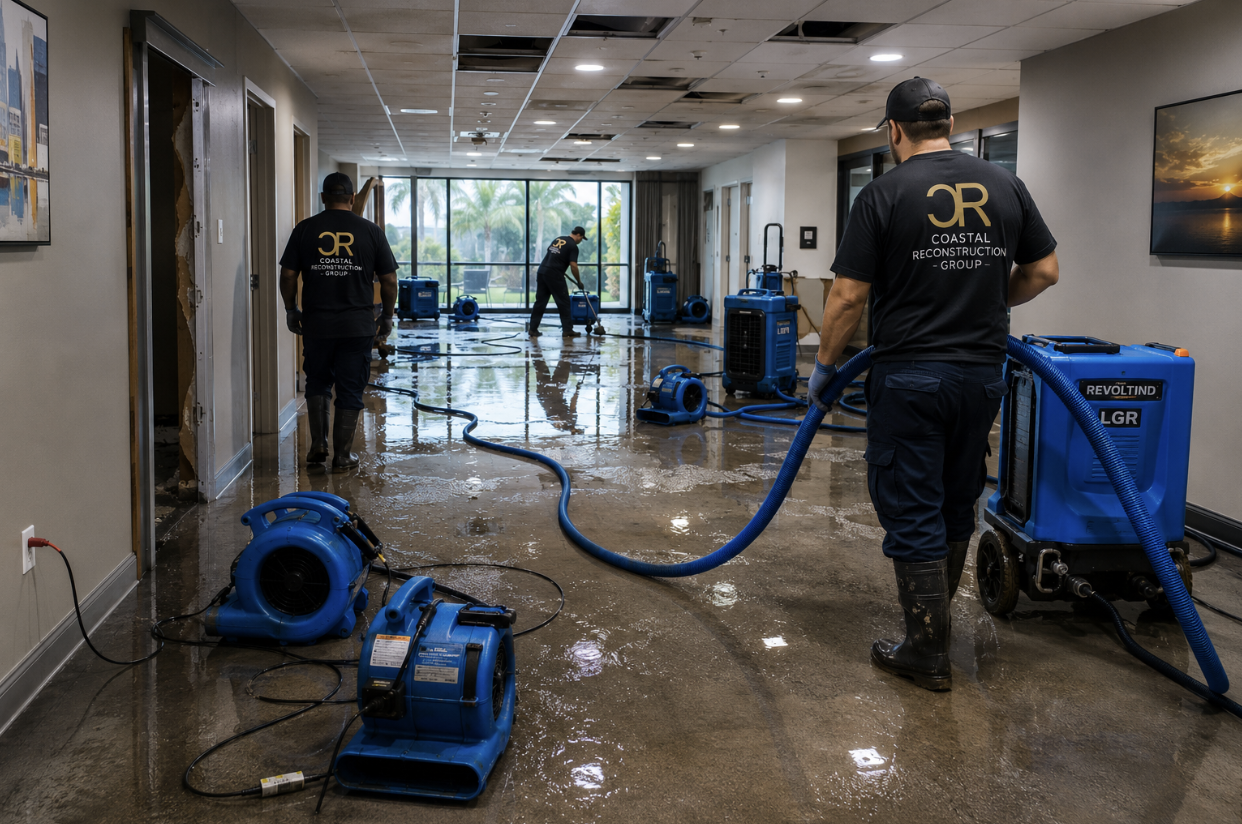
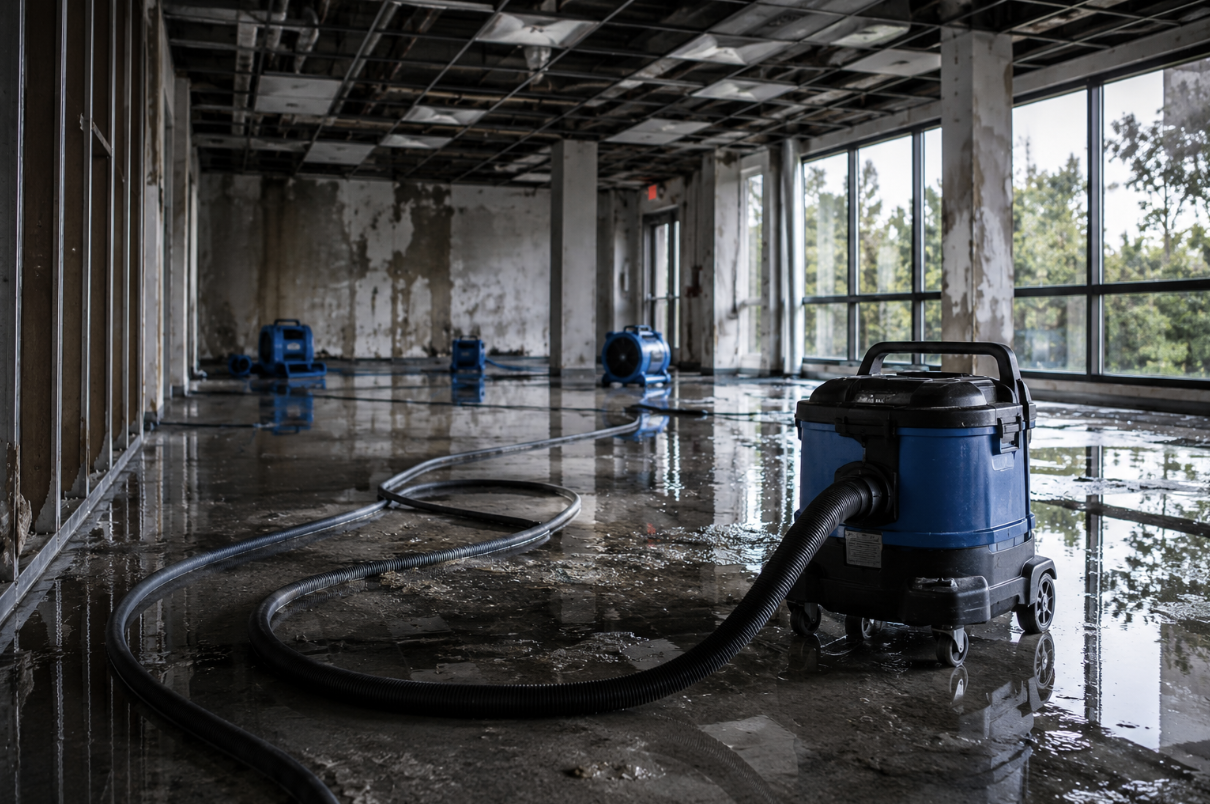
Commercial water extraction begins with removing visible standing water from the property. After a storm, water may collect across flooring systems, behind walls, inside storage areas, or around building equipment.
Professional crews use specialized water extraction equipment such as:
High-capacity pumps
Commercial wet vacuums
Truck-mounted extraction units
Portable extraction systems for interior access
These tools remove large volumes of water quickly and efficiently before additional absorption occurs.
Water removal is especially important in commercial buildings with carpet, wood flooring, drywall, insulation, or sensitive equipment. The faster standing water is removed, the less damage occurs to building materials and interior finishes.
Drying, Dehumidification, and Moisture Control
Once standing water has been extracted, the drying process begins. This step is just as critical as the initial water removal.
Storm damage often leaves behind hidden moisture trapped inside:
Drywall assemblies
Ceiling cavities
Floor systems
Insulation
Framing materials
Commercial drying equipment is used to eliminate this moisture before it causes further damage.
This typically includes:
Industrial air movers
Commercial dehumidifiers
Moisture detection meters
Thermal imaging equipment
Structural drying equipment
Proper dehumidification helps restore safe moisture levels inside the building while preventing secondary damage.
In Florida’s humid climate, moisture control is especially important for preventing mold and protecting indoor air quality after a storm.
Preparing the Property for Restoration
Water extraction is the beginning of the recovery process—not the end of it.
Once moisture is removed, restoration teams assess the condition of the property and determine what materials can be dried versus what needs replacement.
This evaluation may include:
Inspecting drywall and insulation
Assessing flooring damage
Reviewing structural framing conditions
Identifying damaged electrical or HVAC components
Once the property is stabilized and dry, work can transition into repairs, reconstruction, and full water damage restoration.
Common Causes of Storm-Related Water Damage in Commercial Buildings
Roof Leaks and Wind-Driven Rain
Storm-damaged roofing systems are one of the leading causes of water intrusion in commercial properties.
High winds can loosen membranes, flashing, drains, or roofing components, allowing water to enter the building envelope. Wind-driven rain can then travel into ceilings, walls, and upper-floor interiors.
Even a small roof leak can lead to widespread water damage if moisture spreads unnoticed through insulation or ceiling systems.
Flooding and Drainage Overflow
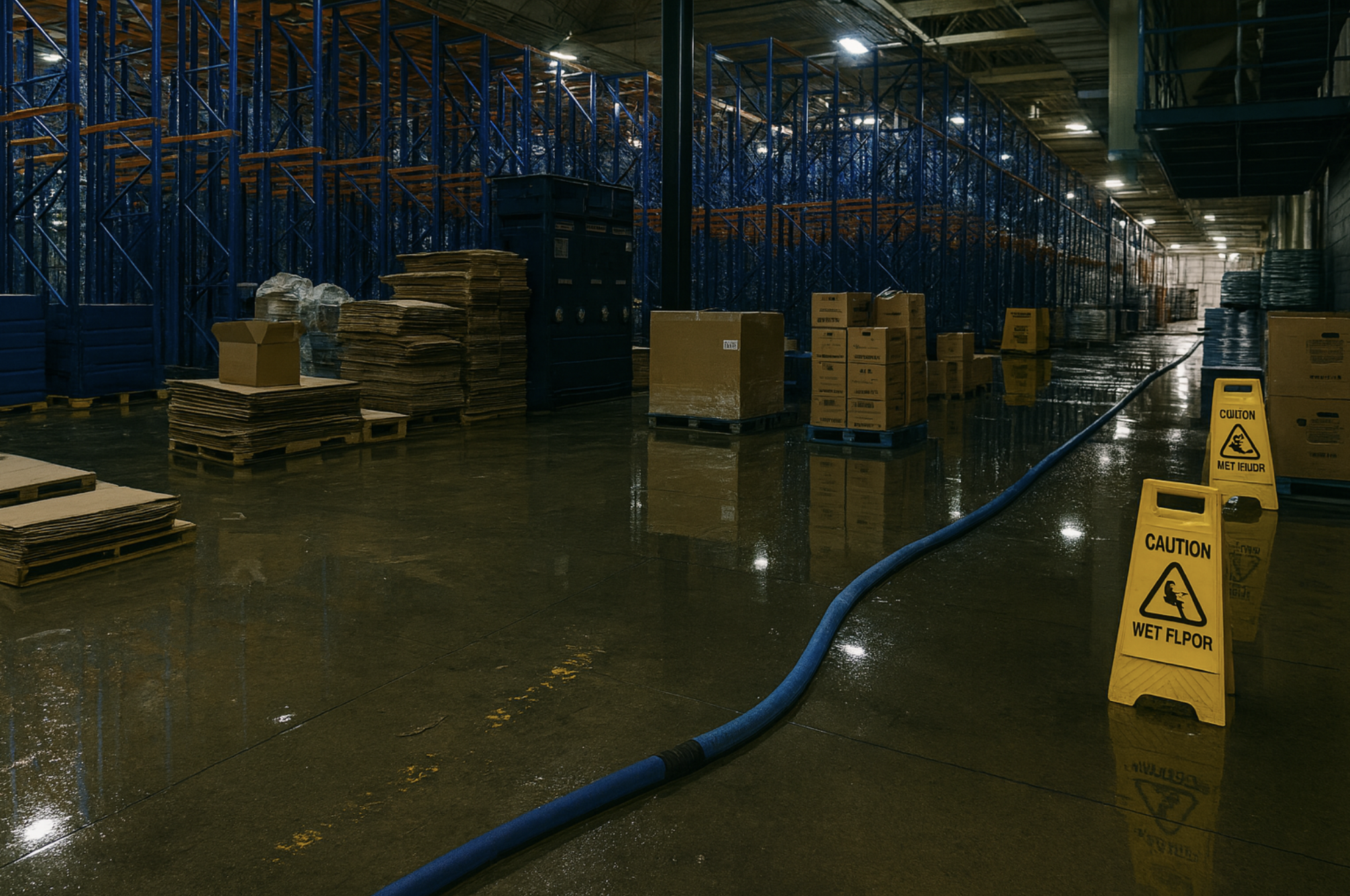
Heavy rainfall and storm surge often overwhelm drainage systems around commercial properties.
Water can enter through:
Exterior doors
Loading docks
Window systems
Foundation openings
Parking lot runoff or blocked drainage
Floodwater entering the structure creates immediate risks to flooring, walls, furniture, equipment, and inventory.
Commercial flood damage often requires rapid extraction followed by drying, sanitation, and restoration.
Plumbing Failures Triggered by Severe Weather
Storm conditions can also trigger plumbing-related water damage.
Heavy rainfall, shifting pressure, and infrastructure overload may cause:
Pipe failures
Backed-up drains
Overflowing plumbing systems
Sewer backups
Mechanical failures connected to storm activity
These events can create interior flooding even when the building itself hasn’t taken direct storm damage.
Why Professional Commercial Water Extraction Is Critical
Preventing Mold and Structural Damage
Water damage spreads fast—but moisture damage spreads even faster when left untreated.
Wet drywall softens and deteriorates. Flooring warps. Insulation loses effectiveness. Framing materials absorb moisture. Within a short period, mold can begin developing inside hidden building cavities.
Professional commercial water extraction helps prevent:
Mold growth
Structural weakening
Material deterioration
Odors and contamination
Indoor air quality concerns
Fast drying is especially important in Florida, where warm temperatures and humidity accelerate mold development.
Protecting Business Operations and Reducing Downtime
Water damage doesn’t just affect buildings—it affects business continuity.
Commercial properties dealing with standing water may experience:
Temporary closures
Tenant disruption
Lost revenue
Unsafe conditions for occupants
Delayed operations or service interruptions
Rapid water mitigation helps businesses reopen sooner while minimizing disruption to tenants, staff, customers, and daily operations.
The sooner extraction begins, the faster the property can move into repairs and recovery.
Supporting Insurance Claims and Recovery Planning
Commercial water extraction also plays an important role in documenting storm damage and supporting insurance recovery.
Professional restoration teams often assist with:
Moisture mapping
Damage assessments
Photo documentation
Scope reporting
Coordination with insurance carriers and adjusters
This documentation can help property owners better understand the extent of damage while supporting next-step planning for restoration and reconstruction.
Why Coastal Reconstruction Group Is Trusted for Commercial Water Extraction
Rapid Emergency Response Across Florida
Coastal Reconstruction Group provides fast emergency response for commercial properties affected by storm-related water damage across Florida.
Our rapid mobilization helps remove standing water quickly, stabilize damaged areas, and prevent additional structural or moisture-related damage.
Commercial-Grade Extraction and Drying Equipment
Coastal uses professional-grade water extraction and drying equipment designed specifically for large-scale commercial properties and disaster recovery.
This includes:
High-capacity extraction systems
Industrial dehumidification equipment
Moisture detection tools
Structural drying technology
This allows our team to manage everything from localized water intrusion to large commercial flood events.
Full-Service Water Damage Restoration and Reconstruction
Beyond extraction, Coastal provides complete water damage restoration services, including:
Emergency water mitigation
Drying and dehumidification
Structural drying
Interior repairs and reconstruction
Our full-service approach creates a smoother transition from emergency cleanup into complete property recovery.
Experience with Large-Scale Commercial Recovery Projects
Commercial water extraction often requires coordination across large buildings, multiple tenants, and complex building systems.
Coastal Reconstruction Group has extensive experience handling water damage recovery in:
Office buildings
Hospitality properties
Retail centers
Healthcare facilities
Multi-tenant commercial properties
Our experience helps property owners recover efficiently while minimizing downtime.
Conclusion – Acting Fast After Storm Water Damage Protects Your Property
Storm-related water damage can escalate quickly in commercial buildings. What begins as standing water can lead to mold growth, structural damage, operational disruption, and expensive repairs if not addressed immediately.
That’s why commercial water extraction should begin as soon as it is safe to access the property.
Fast water removal, proper drying, and moisture control help reduce long-term damage, protect indoor environments, and prepare the building for restoration.
Partnering with an experienced commercial restoration contractor ensures the property is stabilized quickly and the recovery process stays moving forward.
Request Emergency Commercial Water Extraction Services
If your commercial property has been impacted by storm flooding, roof leaks, or interior water intrusion, Coastal Reconstruction Group is ready to respond.
Our team provides:
Emergency commercial water extraction
Site assessments and moisture inspections
Structural drying and dehumidification
Water mitigation and damage documentation
Restoration planning and reconstruction support
Contact Coastal Reconstruction Group today to schedule emergency commercial water extraction services and begin the recovery process before further damage spreads.
FAQs (Frequently Asked Questions)
How quickly should commercial water extraction begin after a storm?
Commercial water extraction should begin as soon as possible—ideally within hours of water intrusion. Fast response helps reduce structural damage, prevent mold growth, and lower restoration costs.
What equipment is used for commercial water extraction?
Commercial water extraction typically u. aaaaases pumps, wet vacuums, truck-mounted extraction systems, industrial air movers, dehumidifiers, and moisture detection equipment.
Can water extraction prevent mold growth?
Yes. Fast water extraction and proper drying significantly reduce the risk of mold by removing moisture before mold can begin growing.
Does insurance typically cover commercial water extraction?
Coverage depends on the cause of loss and the property’s insurance policy. Many commercial policies may cover water extraction related to storm damage or sudden water intrusion.
What happens after the water extraction process is complete?
After extraction, the property is dried, moisture levels are monitored, damaged materials are assessed, and restoration or reconstruction work begins as needed.