Why Debris Removal Is Critical After Severe Weather
Severe weather events can leave commercial properties buried under hazardous debris in a matter of hours. Hurricanes, tornadoes, floods, and extreme windstorms frequently generate massive amounts of construction debris, damaged building material, fallen trees, broken glass, and scattered waste across commercial sites. When a disaster strikes, clearing debris quickly becomes one of the most urgent priorities for property owners and managers.
Accumulated debris creates immediate safety hazards for occupants, employees, and first responders. Broken drywall, splintered wood, twisted metal, shattered glass, and unstable structural materials can cause serious injury if not handled properly. In addition to physical hazards, storm debris can trap moisture, leading to mold growth and long-term structural deterioration.
Rapid emergency debris removal allows restoration work to begin quickly. By removing hazardous materials and clearing the site, professional debris removal services help commercial properties move from disaster response to rebuilding and restoration with minimal delay.
Common Types of Storm Debris Affecting Commercial Properties
Structural Debris from Building Damage
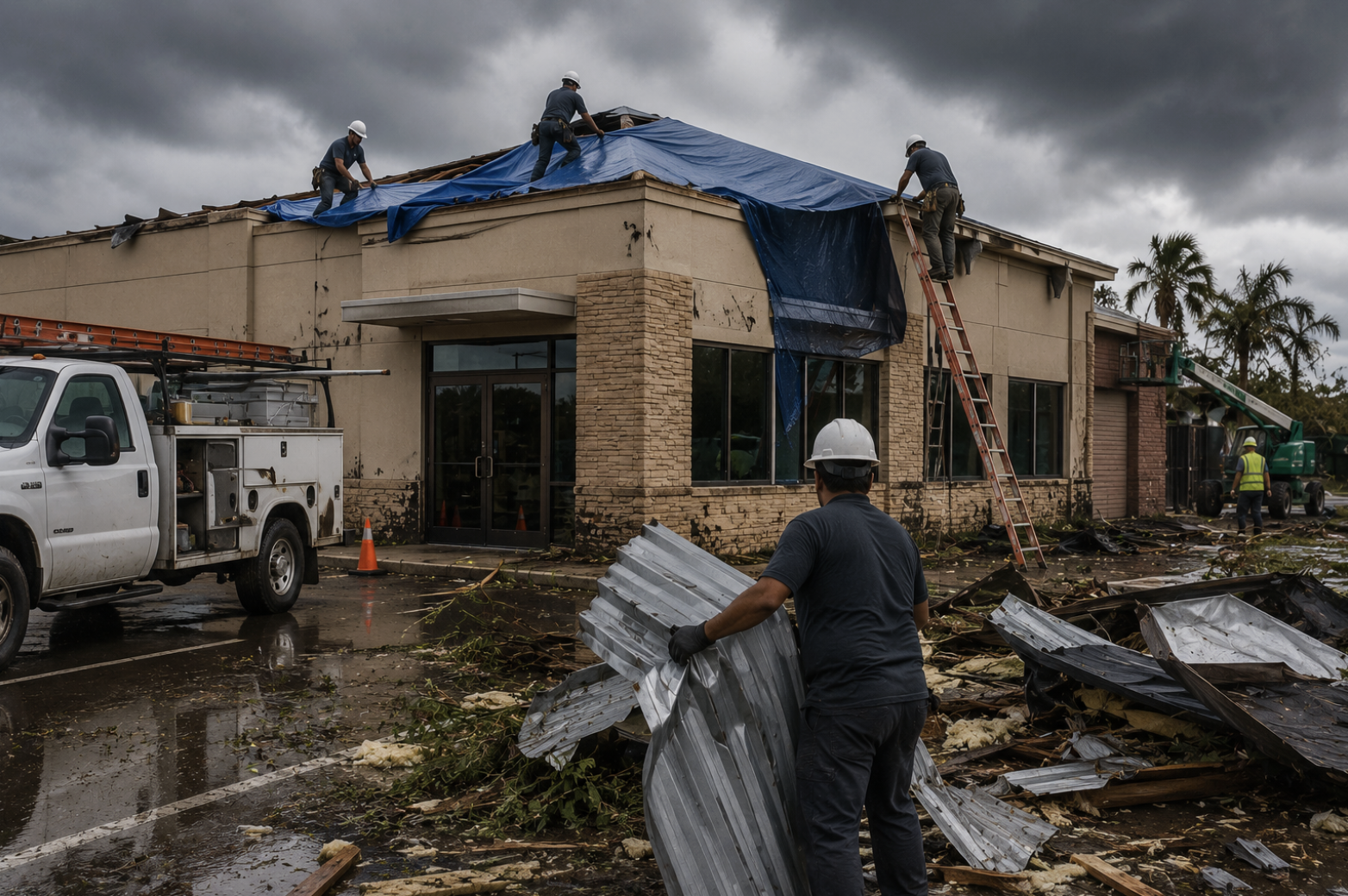
Severe storms often cause structural damage that generates large volumes of demolition debris and construction waste. High winds and flying objects can tear apart roofing systems, exterior siding, and façade components, leaving broken building material scattered across the property.
Typical structural debris may include:
Collapsed roofing materials
Damaged drywall and interior wall components
Broken glass from windows and storefront systems
Fragments of concrete, metal framing, or insulation
In many cases, damaged structures must undergo partial demolition before reconstruction can begin. Demolition debris removal becomes a critical step in preparing the site for repairs and rebuilding.
Natural Debris from Storm Impact
Storms frequently bring down trees, branches, and landscaping elements that become dangerous obstacles across commercial properties. A single fallen tree can block access roads, damage buildings, and interfere with emergency services.
Natural storm debris often includes:
Large tree limbs and trunks
Yard debris such as leaves, mulch, and soil
Wind-blown objects from neighboring properties
Outdoor furniture, signage, or decorative items
Large-scale debris removal projects require heavy equipment and organized debris pickup strategies to safely remove yard debris and damaged materials without causing additional property damage.
Hazardous and Contaminated Debris
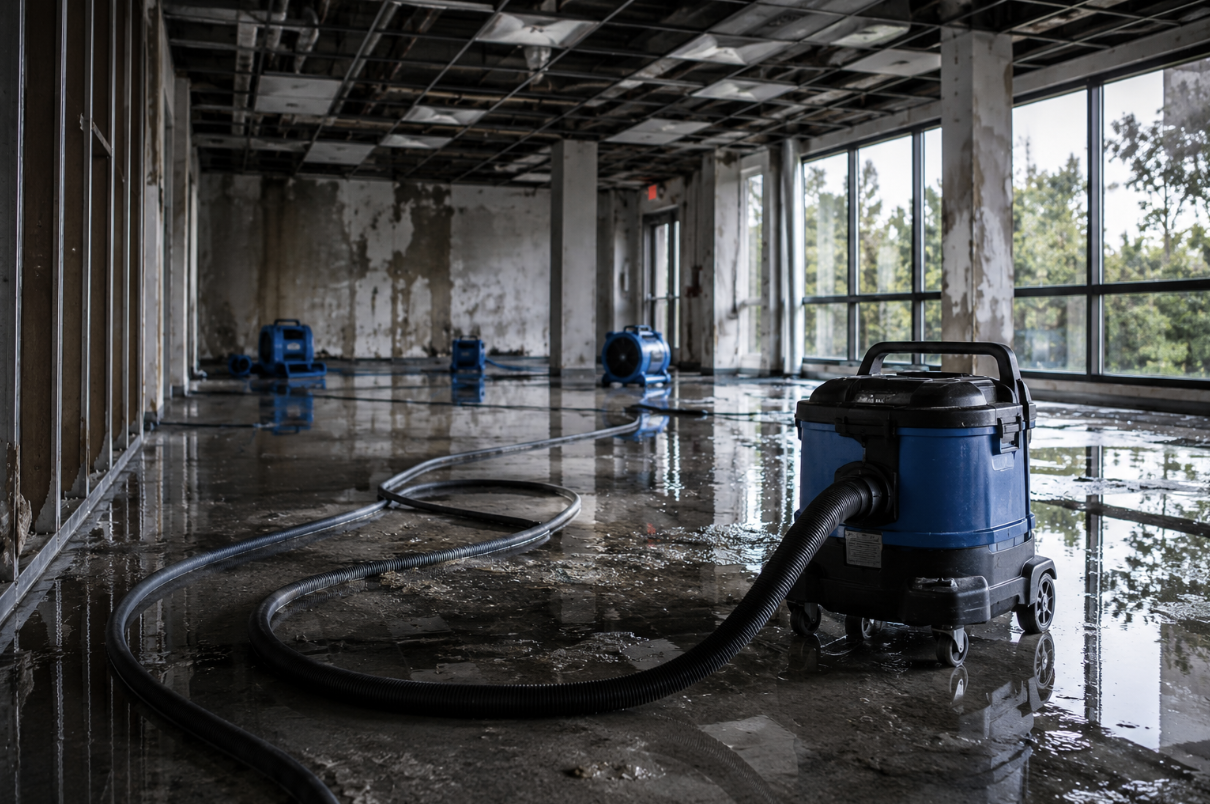
Flooding and severe storms can also produce hazardous debris that requires specialized handling. Floodwaters often contaminate building materials, furniture, and other items with bacteria, chemicals, or sewage.
Examples of hazardous storm debris include:
Flood-soaked drywall and insulation
Contaminated furniture and interior materials
Electrical equipment damaged by water
Electronic waste and damaged appliances
These materials must be handled carefully and transported to approved disposal or recycling facilities. Improper waste removal can create environmental hazards or violate local waste management regulations.
Immediate Steps to Take After Severe Weather Debris Accumulates
Prioritize Safety and Secure the Property
The first priority after a storm or tornado is ensuring safety. Commercial property managers should evaluate the site carefully before allowing anyone to enter damaged areas. Unstable structures, exposed nails, broken glass, and sharp scrap metal can pose serious injury risks.
Steps to improve safety include:
Restricting access to hazardous areas
Identifying unstable structures or falling debris risks
Shutting off power near water-damaged electrical systems
Marking dangerous zones until professional cleanup begins
Professional debris removal teams are trained to manage hazardous environments and follow strict safety protocols when clearing damaged sites.
Document Damage for Insurance and Compliance
Before beginning large-scale debris removal, property owners should document all visible damage for insurance purposes. Insurance claims often require detailed evidence of storm damage, including photographs, inspection reports, and written documentation.
Important documentation steps include:
Photographing damaged building materials and debris piles
Recording structural damage caused by wind, flood, or wildfire-related smoke events
Cataloging damaged items such as furniture, electronics, or building materials
Proper documentation ensures that insurance providers can accurately evaluate the scope of the disaster and determine coverage for debris removal services and restoration costs.
Contact Professional Emergency Debris Removal Services
Once the property is secured and damage documented, the next step is contacting a professional debris removal service. Commercial sites often contain large volumes of construction debris, demolition waste, scrap metal, and damaged building materials that require specialized equipment to remove safely.
Professional crews provide:
Heavy equipment and dumpsters for large-scale debris removal
Trained teams for safe demolition debris removal
Organized sorting of recyclable materials such as wood, concrete, and metal
Efficient hauling to recycling centers or approved landfill facilities
Rapid response is critical. The faster debris is cleared, the sooner restoration crews can begin repairing structural damage and returning the property to normal operations.
The Emergency Debris Removal Process Explained
Initial Site Assessment and Hazard Identification
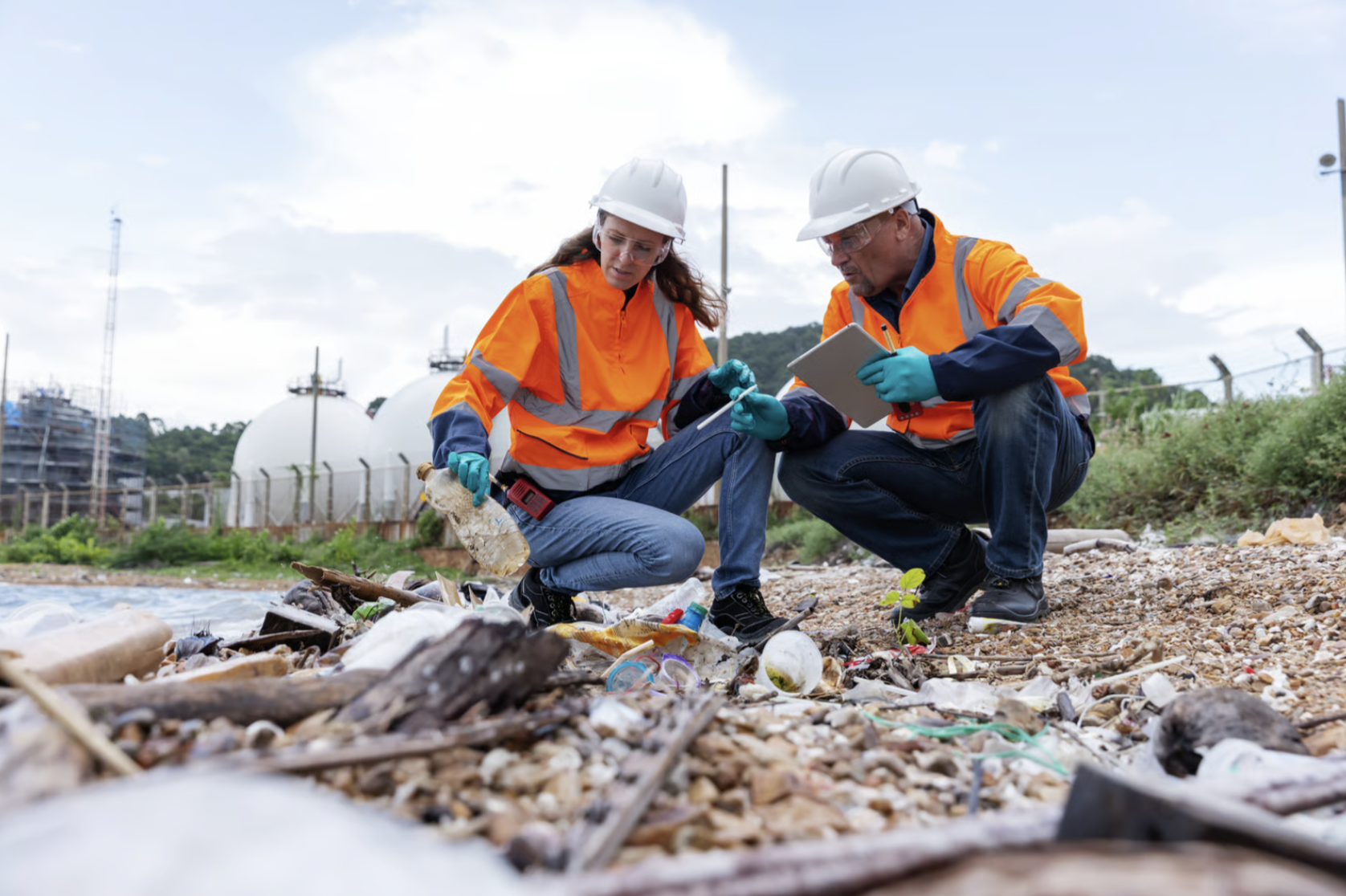
Before any debris removal begins, professionals conduct a detailed site assessment. After a major storm, flood, tornado, or even wildfire-related event, commercial properties may contain multiple hazards that require careful evaluation. Trained crews inspect the property to identify unstable structures, contaminated materials, and dangerous demolition waste that must be handled safely.
During this stage, specialists determine the types of debris present—such as broken drywall, damaged wood framing, shattered glass, scrap metal, or fallen concrete. They also assess environmental risks, including potential mold growth from trapped moisture or contamination from floodwater. This evaluation helps create a safe and efficient debris removal plan tailored to the property’s specific needs.
Debris Clearing and Sorting
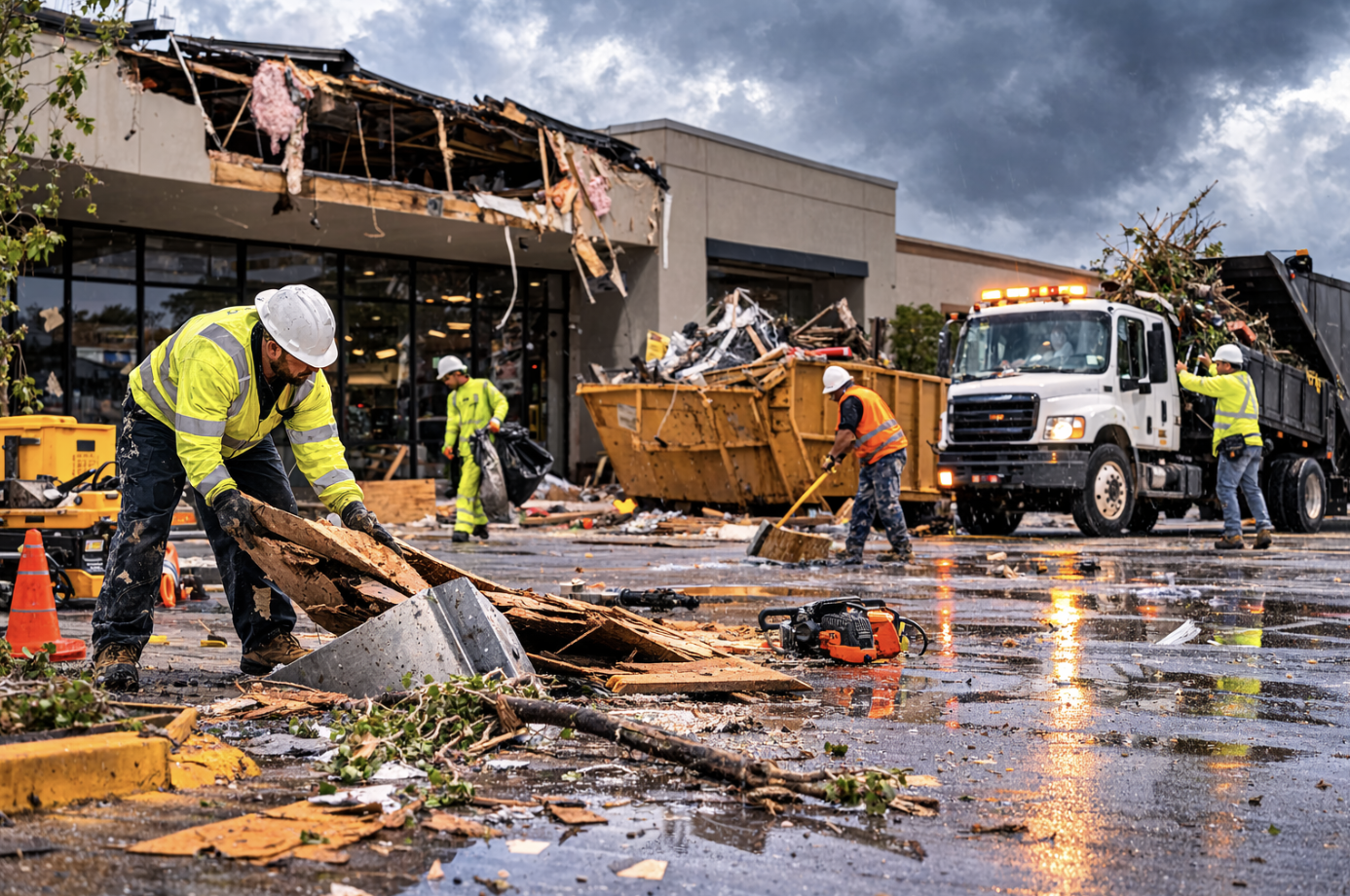
Once the site has been evaluated, crews begin clearing debris using specialized equipment and coordinated cleanup strategies. Large commercial properties often require loaders, cranes, dumpsters, and heavy-duty hauling vehicles to remove storm debris efficiently.
During debris clearing, materials are typically sorted into categories to improve disposal efficiency and support recycling efforts.
Common sorting categories include:
Recyclable materials such as metal scrap, wood, and concrete
Construction debris from damaged structures
Demolition debris generated during partial building removal
Yard debris like fallen tree branches and landscaping waste
Separating materials allows certain items to be reused or recycled instead of sent directly to a landfill. For example, wood and organic yard debris may be processed for compost, while metal scrap and concrete can often be repurposed through recycling facilities.
Transportation and Disposal
After sorting and collection, debris must be transported to appropriate waste management facilities. Professional debris removal services coordinate hauling logistics and ensure that all materials are disposed of according to local environmental regulations.
Common disposal methods include:
Transporting construction waste and demolition waste to approved landfill facilities
Recycling building materials such as concrete, metal, and glass
Handling electronic waste from damaged equipment and appliances
Processing organic debris like trees and vegetation for composting or reuse
Proper disposal is essential for environmental protection and regulatory compliance. Professional cleanup teams ensure that hazardous materials and contaminated items are handled responsibly and that disposal documentation is properly recorded.
Risks of Delaying Debris Removal
Safety Hazards for Occupants and Workers
Leaving debris on a property after severe weather can create serious safety hazards. Piles of broken building material, sharp glass, exposed nails, and unstable structures significantly increase the risk of injuries for workers, tenants, and visitors.
Debris from damaged furniture, construction materials, and structural components can also shift unexpectedly, creating dangerous working conditions. Prompt debris removal protects people on-site and allows recovery efforts to proceed safely.
Property Damage and Structural Deterioration
Storm debris often traps moisture and water against damaged buildings. Over time, this moisture can accelerate structural deterioration and lead to mold growth inside walls and ceilings.
For example, wet drywall, soaked wood framing, and damaged insulation can quickly degrade if debris remains in place. Removing debris quickly helps prevent additional structural damage and reduces the risk of long-term restoration costs.
Delays in Reconstruction and Business Operations
Debris accumulation can significantly delay reconstruction efforts. Contractors cannot begin repairs or restoration work until the site has been cleared of construction debris and hazardous materials.
In commercial environments, these delays may lead to business interruption, lost revenue, and tenant dissatisfaction. Rapid debris removal clears the path for inspections, structural repairs, and full restoration.
Why Commercial Debris Removal Requires Specialized Expertise
Large-Scale Equipment and Logistics
Commercial debris removal projects are far more complex than simple junk removal or residential cleanup. Large commercial buildings often produce massive volumes of debris, including heavy concrete, structural steel, building materials, and damaged equipment.
Specialized equipment such as loaders, cranes, hauling trucks, and industrial dumpsters is required to manage these materials efficiently. Coordinating debris pickup across large commercial sites also requires careful planning and logistical expertise.
Environmental and Regulatory Compliance
Debris removal must comply with local waste management and environmental regulations. Improper disposal of construction waste, demolition debris, or hazardous materials can lead to fines and legal complications.
Professional debris removal services understand how to properly sort materials for recycling, landfill disposal, or specialized handling. Many materials—including concrete, wood, and scrap metal—can be reused or recycled rather than discarded as trash.
Coordination with Restoration and Construction Teams
Debris removal is often the first step in a much larger recovery process. Once debris is cleared, restoration crews can begin repairing structural damage, replacing drywall, rebuilding damaged sections of the property, and addressing issues like mold or water damage.
Coordinating debris removal with restoration and construction teams ensures that recovery work progresses efficiently. When cleanup crews and construction professionals work together, the overall restoration timeline can be significantly reduced.
How Coastal Reconstruction Group Handles Emergency Debris Removal
Rapid Response Teams Across Florida
At Coastal Reconstruction Group, we provide emergency debris removal services throughout Florida following severe weather events. Our rapid response teams mobilize quickly after storms, floods, and other disasters to begin clearing hazardous debris and stabilizing damaged properties.
Fast action helps prevent additional damage and allows commercial property owners to move forward with restoration and rebuilding as soon as possible.
Safe, Efficient Debris Clearing for Commercial Properties
Our crews are equipped with specialized equipment and trained to handle large-scale debris removal projects. Whether we are dealing with fallen trees, demolition debris, construction waste, or damaged furniture and building materials, we make sure debris is cleared safely and efficiently.
By prioritizing safety, organization, and proper waste management practices, we help protect both the property and the surrounding environment.
Insurance-Ready Documentation and Site Assessments
Debris removal following a disaster often requires coordination with insurance providers. At Coastal Reconstruction Group, we provide detailed site assessments, photographic documentation, and written reports to support insurance claims.
This documentation helps property owners demonstrate the scope of storm damage and justify debris removal and restoration costs.
Full-Service Disaster Recovery and Reconstruction
In addition to debris removal services, we offer complete restoration and reconstruction solutions. After clearing debris, our team can address structural repairs, water damage restoration, mold mitigation, and rebuilding efforts.
This full-service approach allows property owners to work with one experienced contractor throughout the entire recovery process—from debris removal to final reconstruction.
Clearing the Path to Recovery After Severe Weather
Severe weather can leave commercial properties overwhelmed with debris, damaged materials, and hazardous conditions. Rapid debris removal is essential for protecting safety, preventing further structural damage, and allowing restoration work to begin.
Professional debris removal services provide the equipment, expertise, and logistical coordination necessary to manage large-scale disaster cleanup. By acting quickly and partnering with experienced contractors, property owners can minimize downtime and begin the recovery process faster.
Request an Emergency Debris Removal Assessment
If your commercial property has been affected by a storm, flood, or other disaster, we are ready to help. At Coastal Reconstruction Group, our experienced teams provide emergency debris removal, site stabilization, and full restoration services to get your property back on track.
From initial debris pickup and waste disposal to structural repairs and reconstruction, we deliver comprehensive solutions designed to protect your investment.
Contact Coastal Reconstruction Group today to request an emergency debris removal assessment and begin the path to recovery.
FAQs (Frequently Asked Questions)
What types of debris require professional removal after storms?
Storms can produce many types of debris including fallen trees, damaged building materials, drywall, broken glass, roofing materials, furniture, and construction debris. Flood events may also leave contaminated materials that require professional debris removal services to safely handle and dispose of waste.
How quickly should debris be removed after severe weather?
Debris should be removed as soon as it is safe to access the property. Rapid debris removal helps reduce safety hazards, prevents additional structural damage, and allows restoration and reconstruction work to begin sooner.
Will insurance cover debris removal services?
Many commercial insurance policies include coverage for debris removal after a disaster such as a hurricane, flood, or tornado. Coverage varies by policy, so it is important to document damage and work with contractors who can provide detailed reports for insurance claims.
What equipment is used for large-scale debris removal?
Professional debris removal crews use specialized equipment such as loaders, cranes, hauling trucks, dumpsters, and heavy-duty cutting tools. This equipment allows teams to safely remove large debris like concrete, wood, structural materials, and fallen trees from commercial sites.
Can debris removal begin before insurance inspections?
In many cases, emergency debris removal can begin immediately to address safety hazards and prevent further damage. However, it is recommended to document the site with photos and videos before cleanup begins to support insurance claims and damage assessments.