Introduction – Why Interior Renovation Matters for Florida Businesses
In Florida’s fast-paced commercial real estate landscape, interior renovation is more than just a cosmetic upgrade—it’s a strategic investment. Whether you're managing an office building, retail center, hospitality venue, or healthcare facility, thoughtful interior improvements can directly impact employee productivity, client satisfaction, and tenant retention.
Given Florida’s unique mix of tropical weather, evolving building codes, and tourism-driven demand, interior remodeling must be tailored with these factors in mind. From code compliance and storm-resistant materials to peak-season scheduling, commercial property owners need to plan strategically to achieve long-lasting results.
This guide outlines the key signs your space may need an interior renovation, Florida-specific considerations, and best practices to ensure your project is compliant, efficient, and aligned with business goals.
Signs Your Commercial Property Needs an Interior Renovation
Outdated Layouts or Designs
A dated interior design can give tenants and clients the wrong impression—suggesting the property is behind the times or poorly maintained. Inefficient floor plans, outdated finishes, and non-functional spaces such as closed-off kitchens or underutilized break rooms can limit productivity and value. Interior design trends shift over time, and what worked a decade ago may no longer meet current needs or design expectations.
Wear and Tear from High Foot Traffic or Storm Damage
In Florida, where storm damage and high humidity are common, commercial properties experience significant wear. You may notice ceiling stains from water damage, warped flooring, faded walls, or cracked tile. Properties in high-traffic areas like shopping centers or hotels may show signs of heavy use faster, making regular home improvement and interior remodels essential to maintaining appeal and function.
Non-Compliance with Modern Codes or Accessibility Standards
Regulatory standards evolve, especially when it comes to accessibility, safety, and energy efficiency. If your property isn’t ADA-compliant or lacks features required by the Florida Building Code, it’s time to renovate. Areas such as public restrooms, entryways, and even employee breakrooms or kitchens often require upgrades to meet modern expectations. Non-compliance can limit your ability to lease space, pass inspections, or attract high-value tenants.
Florida-Specific Interior Renovation Considerations
Building Code Requirements and Permitting
Florida enforces some of the strictest construction and remodeling standards in the country. The Florida Building Code (FBC) includes specific mandates for fire safety, accessibility, energy efficiency, and storm-resilient design. Commercial interior remodels that involve altering floorplans, electrical systems, kitchens, or bathrooms often require permits.
Working with a licensed general contractor experienced in Florida commercial renovation helps ensure your project complies with all local and state regulations—avoiding delays and costly rework.
Materials That Withstand Florida's Climate
Florida’s humid, storm-prone environment demands materials that resist moisture, mold, and corrosion. Mold-resistant drywall, hurricane-rated glass, and water-resistant flooring materials are all critical for long-term performance. Whether renovating a bedroom suite in a resort or a corporate office’s living room-style lounge, choosing the right materials is vital to protect your investment and meet tenant expectations.
Kitchens and bathrooms, in particular, should feature finishes that can stand up to humidity and heavy use. Using high-durability, low-maintenance products will also reduce repair costs and extend the lifespan of your remodel.
Scheduling Renovations Around Seasonal Business Cycles
Florida’s economy is heavily influenced by seasonal demand—particularly in hospitality, tourism, and education. For commercial property owners, timing your renovation is just as important as the renovation itself. Performing upgrades during off-peak seasons helps minimize revenue loss and disruption to operations. Interior renovations in medical centers, schools, or hotels must often be phased or scheduled during low-occupancy periods.
Key Areas to Focus on in a Commercial Interior Renovation
Lobbies, Hallways, and Common Areas
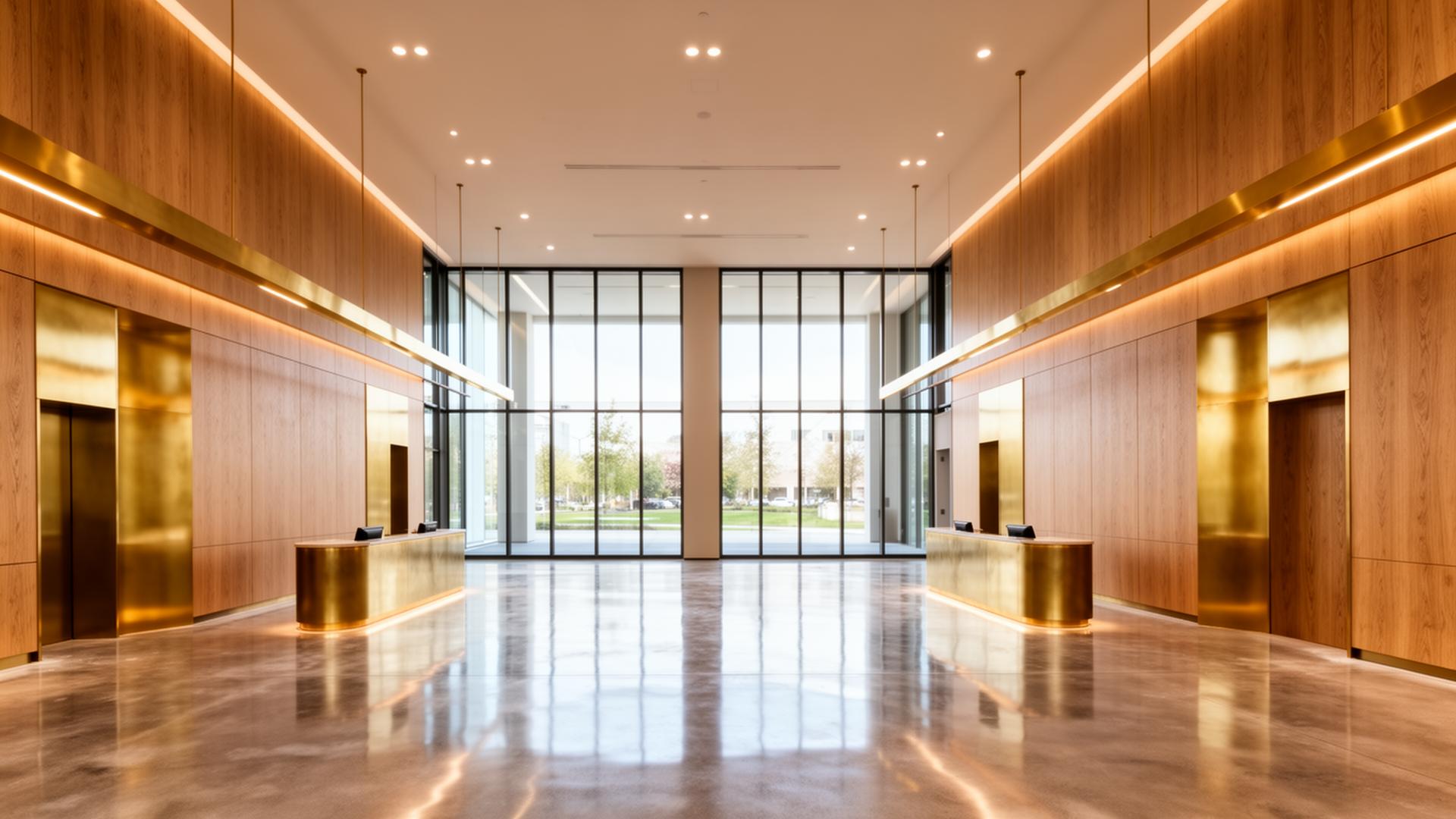
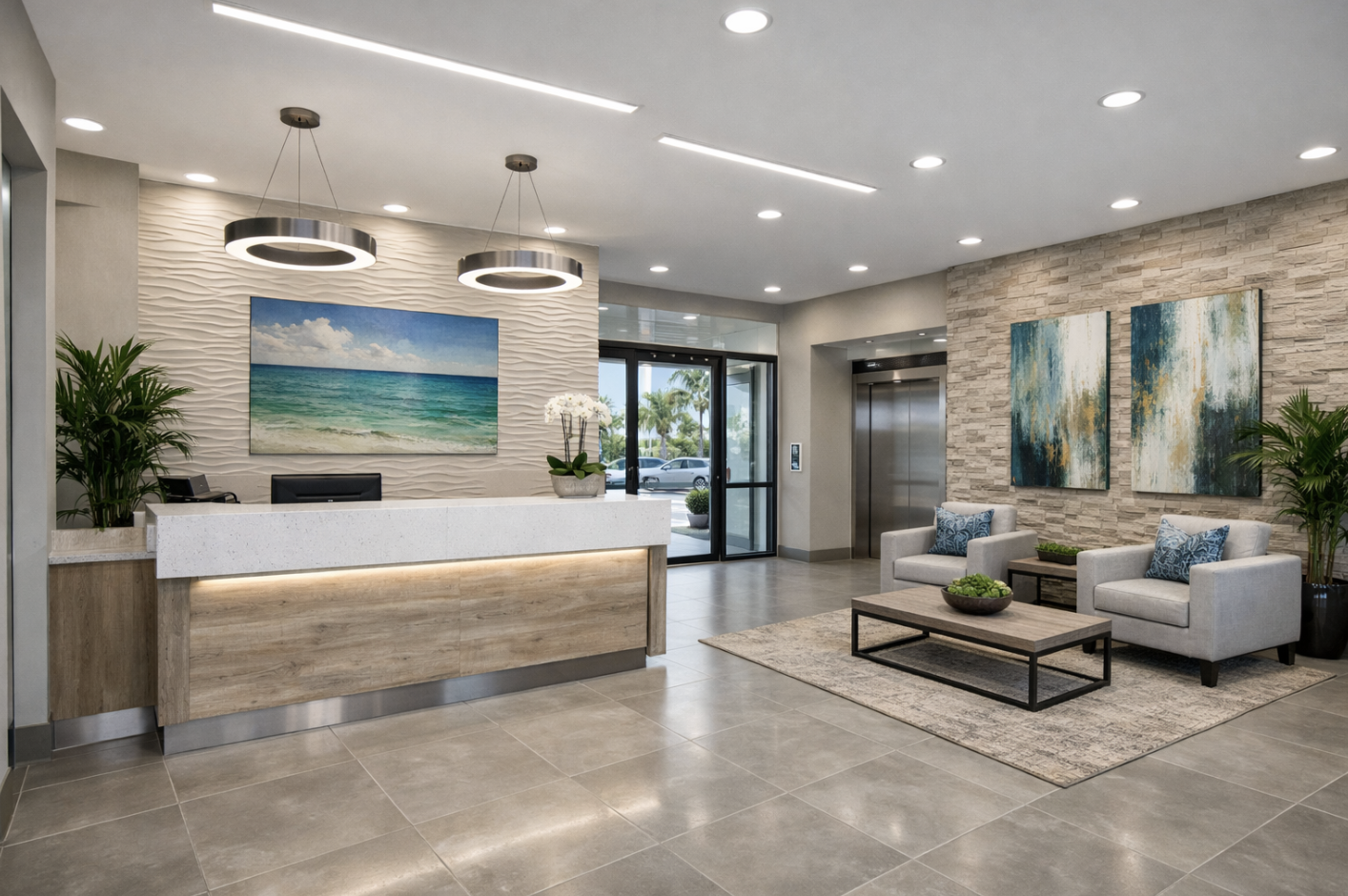
Your lobby and shared spaces create the first impression for clients, tenants, and employees. Interior renovation of these areas should prioritize branding, flow, and comfort. Modernizing lighting, ceiling tiles, flooring, and signage can dramatically elevate the space. Adding seating, digital directories, or branded wall features enhances usability and professionalism.
Bathrooms, Kitchens, and Break Rooms
High-traffic utility spaces must be both functional and compliant. In Florida’s humid climate, using mold- and water-resistant materials in restrooms and kitchens is essential. Renovations should focus on:
Code-compliant layouts with ADA accessibility
Durable counters, sinks, and flooring
Energy-efficient lighting and fixtures
Improved ventilation and layout for staff well-being
Break rooms and kitchens should reflect the needs of the modern workforce—offering comfort, cleanliness, and modern appliances that foster a productive environment.
Tenant Spaces or Customer-Facing Rooms
Retail, office, or medical tenant spaces often require customized renovations tailored to their industry. Whether you’re refreshing a medical suite or reconfiguring open-plan office spaces, designs must balance aesthetics, acoustics, and flexibility. Coastal environments may demand durable interior finishes, especially in beachfront or storm-prone locations.
Budgeting and Planning for a Successful Interior Renovation
Creating a Realistic Renovation Budget
Accurate budgeting is critical. A comprehensive renovation plan should include:
Material and labor costs
Soft costs like architectural or interior design services
Permitting and regulatory fees
Contingency (typically 10–20%) for unexpected conditions such as mold, ceiling leaks, or subfloor damage
Partnering with a general contractor experienced in Florida home remodeling and commercial renovation helps avoid cost overruns and ensures transparency from the start.
Phasing Work to Minimize Disruption
Interior remodels of occupied properties require thoughtful planning. Phasing your renovation by floor, wing, or tenant unit allows operations to continue while construction progresses. Strategies may include:
After-hours or weekend construction
Temporary partitions and dust control barriers
Relocating key functions temporarily
Communication with tenants and stakeholders throughout the process is crucial to maintaining satisfaction and avoiding conflict.
Choosing the Right Interior Renovation Contractor
Not all contractors are equipped to handle commercial renovations in Florida’s complex regulatory and climatic landscape. Look for a renovation partner that offers:
Valid Florida contractor licenses and insurance
Experience with interior and home improvement projects in your industry
Clear communication and transparent pricing
A portfolio of completed interior remodels or tenant improvement projects
A contractor familiar with storm-damaged structures or occupied renovations will ensure your project is safe, compliant, and efficient.
Why Coastal Reconstruction Group Is a Trusted Interior Renovation Partner
Decades of Commercial Renovation Experience Across Florida
With a deep portfolio across hospitality, healthcare, retail, and multi-family properties, Coastal brings proven experience in interior renovations tailored to Florida’s unique needs.
Licensed, Bonded, and Code-Compliant
Coastal is fully licensed and bonded in Florida, with expertise in navigating permitting, life safety upgrades, and Florida Building Code requirements for interior remodels and commercial properties.
Proven in High-Traffic, Occupied, and Storm-Affected Environments
Whether renovating after a storm or working around active tenants, Coastal’s team delivers results with minimal disruption and maximum professionalism.
Turnkey Services: Design, Renovation, and Restoration
From pre-construction assessments to final walk-throughs, Coastal offers full-service support—including architectural design collaboration, project management, and restoration services as needed.
Conclusion – Invest in Your Interior for Long-Term ROI
A well-planned interior renovation can boost tenant retention, increase property value, and enhance brand reputation. In Florida’s demanding market, staying up to code and ahead of design trends ensures your commercial property remains competitive and appealing.
Coastal Reconstruction Group brings decades of experience, deep regulatory knowledge, and a commitment to delivering quality results on time and on budget—making them a trusted partner for any interior renovation in Florida.
Request an Interior Renovation Consultation
If you're planning an interior renovation in Florida, Coastal Reconstruction Group offers expert guidance from concept to completion. Whether you're upgrading a tenant space, modernizing a lobby, or remodeling restrooms and kitchens, Coastal delivers code-compliant, durable, and visually impressive solutions.
Schedule your free assessment or bid review today and find out how Coastal can help you elevate your property from the inside out.
FAQs (Frequently Asked Questions)
How long does a typical interior renovation take?
The timeline depends on the size and complexity of the project. Small renovations like lobby or restroom updates may take a few weeks, while full-floor or multi-tenant interior remodels can take several months. Phased scheduling can reduce disruption and allow work to be done during off-hours.
Do I need to vacate the property during renovation?
Not always. Many interior renovations are completed while the building remains occupied. With proper phasing, dust control, and communication, contractors can work around active operations—especially in commercial or healthcare settings.
Can you renovate tenant spaces without disrupting operations?
Yes. Experienced contractors like Coastal Reconstruction Group use phased plans, temporary barriers, and night/weekend work strategies to renovate tenant spaces with minimal disruption. Communication and planning are key.
What materials work best for Florida interiors?
Moisture-resistant drywall, mold-inhibiting paint, non-slip flooring, and hurricane-rated windows are ideal for Florida’s climate. These materials help prevent water damage, improve longevity, and ensure compliance with the Florida Building Code.
How does Coastal Reconstruction Group approach code compliance?
Coastal follows all state and local regulations, including ADA, life safety, and energy codes. Their licensed professionals coordinate with local inspectors, handle permitting, and ensure every aspect of the interior renovation meets Florida’s strict standards.