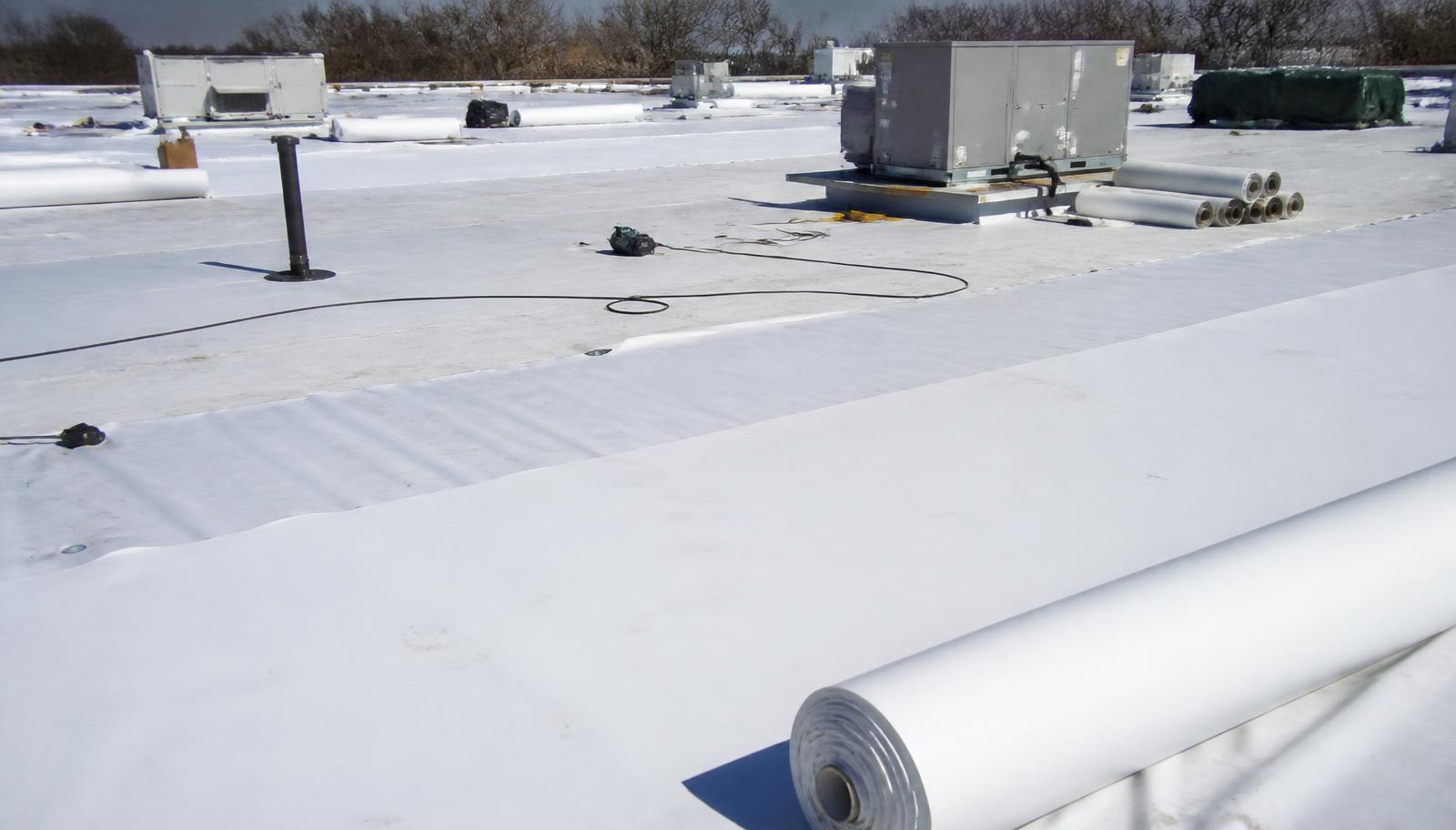
For commercial property owners, the repair-or-replace decision depends on the roof system’s age, leak pattern, recover history, moisture below the membrane, and the cost of keeping failures temporary. A targeted repair can be the right answer when damage is isolated; replacement becomes more defensible when failures are recurring or the assembly no longer protects the building. This commercial roof replacement decision should be documented, not based on one visible leak.
How do you know when to repair a commercial flat roof?
Repair is usually appropriate when the damage is localized, the surrounding membrane is serviceable, and the roof assembly still has useful life. A qualified commercial contractor should inspect seams, flashings, penetrations, drains, curbs, edge metal, insulation, and the interior side of the roof deck. A single puncture, failed flashing detail, or blocked drain can often be corrected without disturbing the entire field membrane.
Repairs should still be recorded with photographs, moisture observations, material information, and the location of the work. On buildings in Florida, Georgia, the Carolinas, Alabama, and Tennessee, heavy rain, heat, humidity, and wind-driven weather can expose weak transitions quickly. A repair plan that only addresses the stain inside the building may miss the exterior source.
- One or a small number of isolated leak locations.
- Sound membrane and insulation around the damaged area.
- No evidence of widespread wet insulation or deteriorated decking.
- Repair details that can be tied into the existing system correctly.
When is commercial roof replacement the better option?
Replacement is generally the stronger option when failures are widespread, the assembly is repeatedly repaired, or concealed moisture and deterioration make isolated work unreliable. Recurring interior staining, widespread seam separation, brittle membrane, saturated insulation, rusted decking, and repeated emergency calls are warning signs that the roof has become a capital-planning issue rather than a maintenance issue.
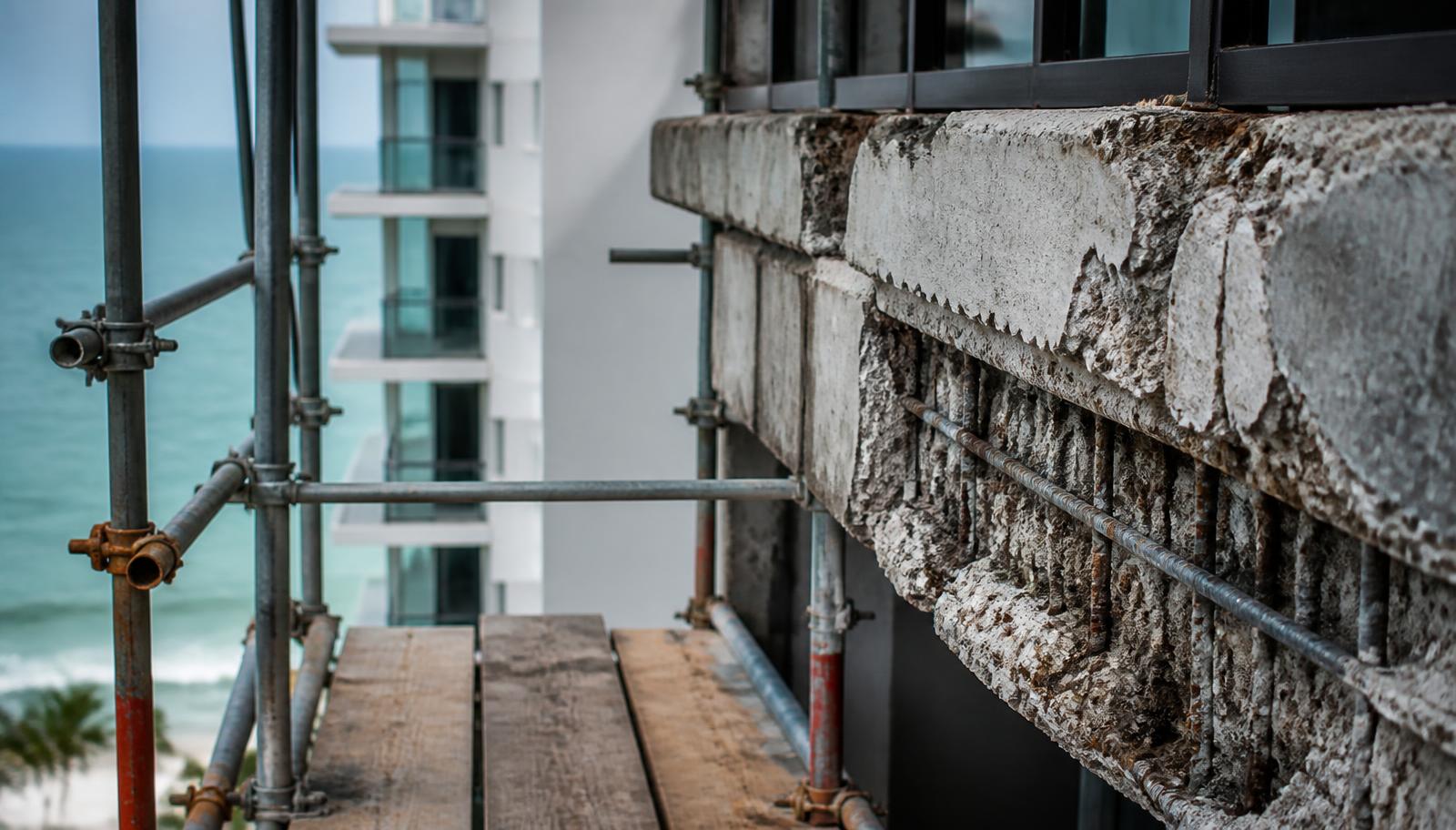
The decision should consider the full assembly, not only the top surface. A roof may look acceptable from the parking lot while moisture has migrated beneath the membrane. Core cuts or other diagnostic methods should be planned by qualified professionals and repaired properly afterward. Coastal Reconstruction Group can coordinate commercial roof and building-envelope work as part of a broader reconstruction scope.
What should a commercial roof inspection include?
A useful inspection connects observed roof conditions to probable causes, repair alternatives, and the risk of deferring work. The inspection should identify the roof system, approximate installation history when available, drainage conditions, penetrations, edge conditions, previous overlays, and locations of interior symptoms. It should also separate urgent life-safety or active-water issues from planned capital work.
Property teams should request a written record that includes marked-up roof plans or photographs, not just a list of recommended products. A good report helps owners compare a focused repair, a phased replacement, or a complete replacement. It also gives facility staff a baseline for future inspections after storms or major maintenance events.
How do TPO, PVC, EPDM, and modified bitumen compare?
TPO, PVC, EPDM, and modified bitumen are all established low-slope roofing systems, but the right selection depends on the building, climate, detailing, maintenance plan, and project constraints. TPO and PVC are thermoplastic membranes commonly heat-welded at seams. EPDM is a flexible synthetic rubber membrane. Modified bitumen is a reinforced asphalt-based system used in a range of multi-ply configurations.
| Decision factor | Why it matters |
|---|---|
| Roof geometry | Curbs, penetrations, slopes, drains, and edge conditions affect detailing. |
| Existing assembly | Recover and replacement options depend on layers, attachment, and moisture. |
| Occupancy | Active offices, healthcare, hospitality, and retail need coordinated access and protection. |
| Weather exposure | Florida Building Code wind-uplift requirements and coastal conditions affect design. |
| Maintenance plan | Access, roof traffic, drainage cleaning, and inspection frequency influence lifecycle risk. |
What Florida wind requirements affect commercial roof replacement?
Commercial roof replacement in Florida must be designed and installed to meet applicable Florida Building Code requirements, including wind-uplift provisions and product approvals where required. The project team should confirm the building’s location, exposure, roof zone, attachment method, and selected assembly with the design professional and authority having jurisdiction.
In Miami-Dade and Broward counties, products may also require a Notice of Acceptance, commonly called an NOA, when the applicable code and approval pathway require it. This is not a reason to select a product by brand name alone. The approved assembly, substrate condition, fastening pattern, edge details, and installation quality all matter.
Can a commercial roof be replaced while the building stays open?
Many commercial roof projects can be phased while the property operates, but the plan must control access, noise, vibration, weather exposure, and temporary protection. Offices, retail centers, hotels, senior living communities, and healthcare facilities each have different operating constraints. A construction manager should coordinate roof access with facility leadership, protect occupied areas, maintain egress, and establish a response plan for rain during open sections.
Phasing may follow roof zones, wings, tenant areas, or scheduled maintenance windows. The right sequence is the one that protects the building and reduces operational surprises, not necessarily the one that creates the fewest mobilizations.
What documentation should owners keep after roof work?
Owners should retain the inspection, scope, approved products, photographs, change documentation, closeout information, and maintenance recommendations together. These records support future repairs, warranty administration, insurance conversations, refinancing, and capital planning. They also give a new property manager a clear history of what was installed and why.
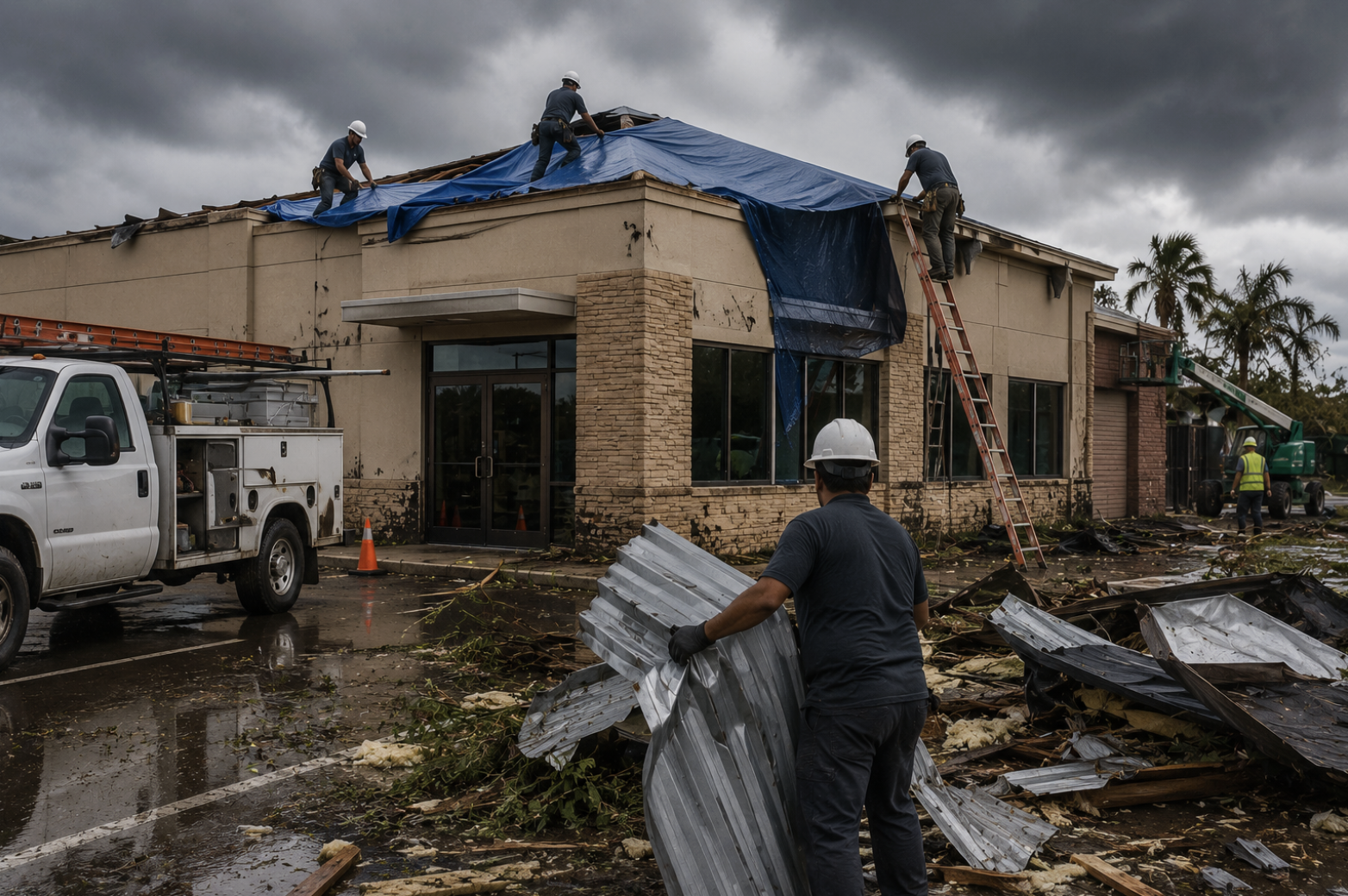
After storm damage, roof decisions may intersect with drying, contents protection, and insurance documentation. CRG’s commercial storm and wind-damage restoration work can be coordinated with reconstruction when the building envelope and interior have both been affected.
What is the best next step for a commercial roof decision?
The best next step is a documented condition assessment that compares repair, phased replacement, and full replacement against building use and risk. Avoid making a final decision from a single leak photograph or an undetailed proposal. Ask what is included, what conditions could change the scope, how occupied areas will be protected, and what closeout records will be delivered.
For property teams planning work across the Southeast, an experienced commercial general contractor can coordinate roof, envelope, restoration, and occupied-site requirements. Review the related commercial roof repair discussion, then contact Coastal Reconstruction Group for a project-specific assessment.
Frequently asked questions
Is commercial roof repair always cheaper than replacement?
Not necessarily. Repair can cost less initially, but repeated repairs, hidden moisture, interior damage, access costs, and business disruption can change the lifecycle comparison. The right decision requires a condition-based scope rather than a simple price comparison.
How often should a commercial roof be inspected?
Inspection frequency should match the roof system, age, exposure, maintenance history, and building risk. Property teams should also inspect after significant storms and whenever interior symptoms appear.
Does commercial roof replacement require a permit?
Permit requirements vary by jurisdiction, scope, roof assembly, and local rules. The project team should confirm requirements with the applicable authority having jurisdiction before work begins.
What makes Florida commercial roofing different?
Heat, humidity, intense rainfall, hurricanes, wind-borne debris regions, and local product-approval requirements can affect design, detailing, scheduling, and maintenance. Florida projects should be evaluated against the current Florida Building Code and local requirements.