A large commercial loss is a property event whose scale, complexity, or business impact exceeds routine repair work — a multi-floor water release, a fire affecting building systems, a hurricane that opens the envelope of an occupied property, or a failure that shuts down revenue-producing space. Commercial restoration on that scale is a construction-management problem first: assessment, stabilization, documentation, sequencing, and reconstruction all have to run under one accountable plan while the property continues operating where it can.
What counts as a large commercial loss?
A large loss is defined by complexity and operational impact, not by a single dollar threshold. A 60,000-square-foot senior living community with saturated corridors and displaced residents can be a larger management problem than a physically bigger but empty warehouse. Common markers include multiple buildings or floors, damaged mechanical and life-safety systems, contaminated water, structural questions, extended business interruption, and multiple stakeholders (ownership, operator, lender, carrier, adjuster, and authorities).
What happens in the first 24 hours?
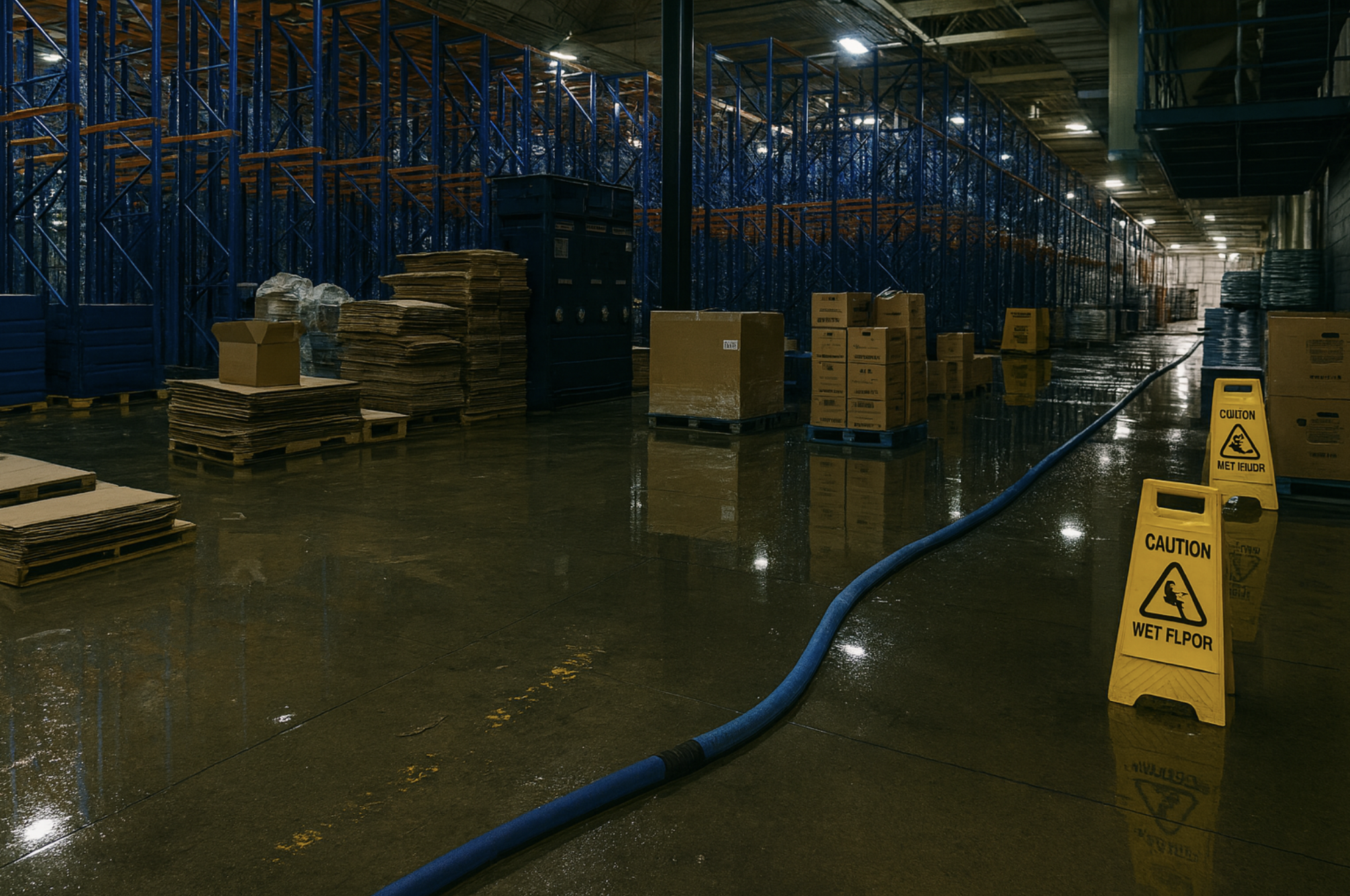
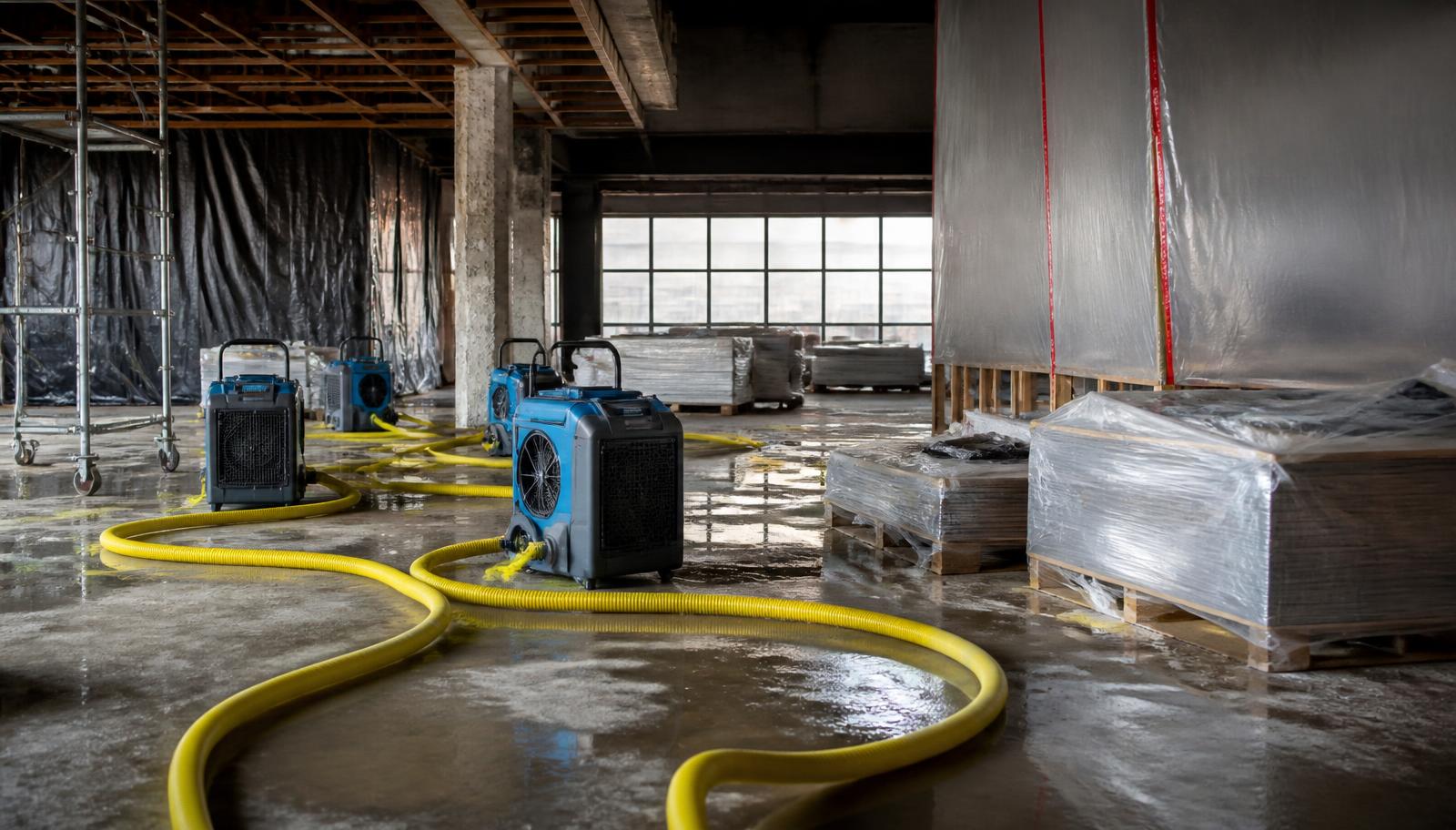
The first day is about life safety, control of the hazard, access, and documentation — not finish repairs. The initial site visit should confirm whether the building is safe to enter, whether utilities need isolation, where water or smoke has traveled, and what must be protected immediately.
- Confirm life-safety conditions and restrict unsafe areas.
- Stop the source and isolate affected utilities and systems.
- Record time-stamped photos, moisture readings, and area conditions.
- Set containment, temporary power, and secure access.
- Establish one point of contact for the owner, operator, and claim team.
CRG coordinates this stage through its Rapid Response program and commercial restoration services.
How is the scope developed on a large loss?
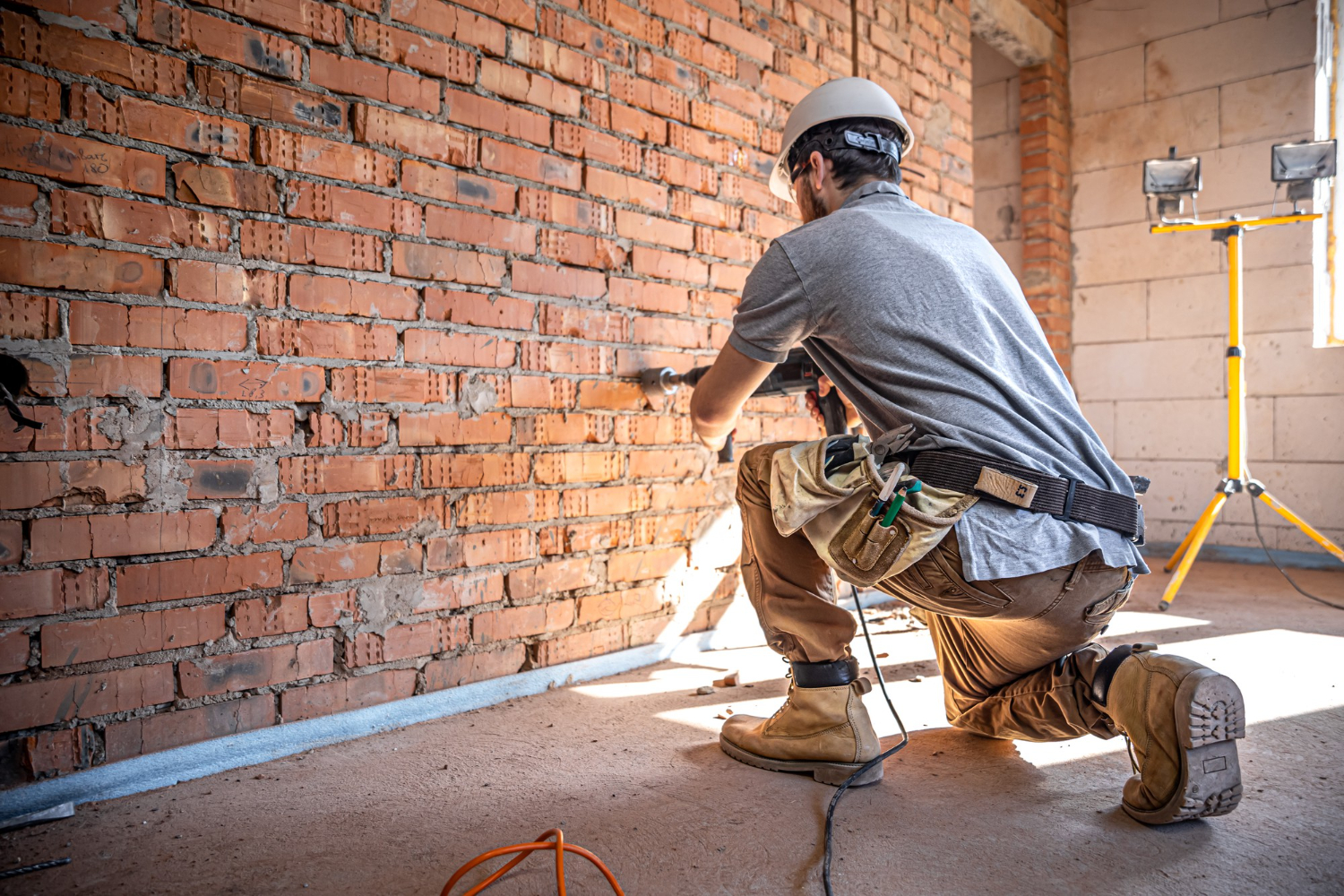
Scope development converts field observations into a defensible, buildable plan that separates emergency mitigation from reconstruction. Mitigation covers extraction, drying, containment, contents handling, and temporary protection. Reconstruction covers demolition, systems repair, finishes, permitting, and turnover.
| Phase | Primary objective | Typical output |
|---|---|---|
| Assessment | Understand damage, category, and building systems | Condition report, moisture map, photo log |
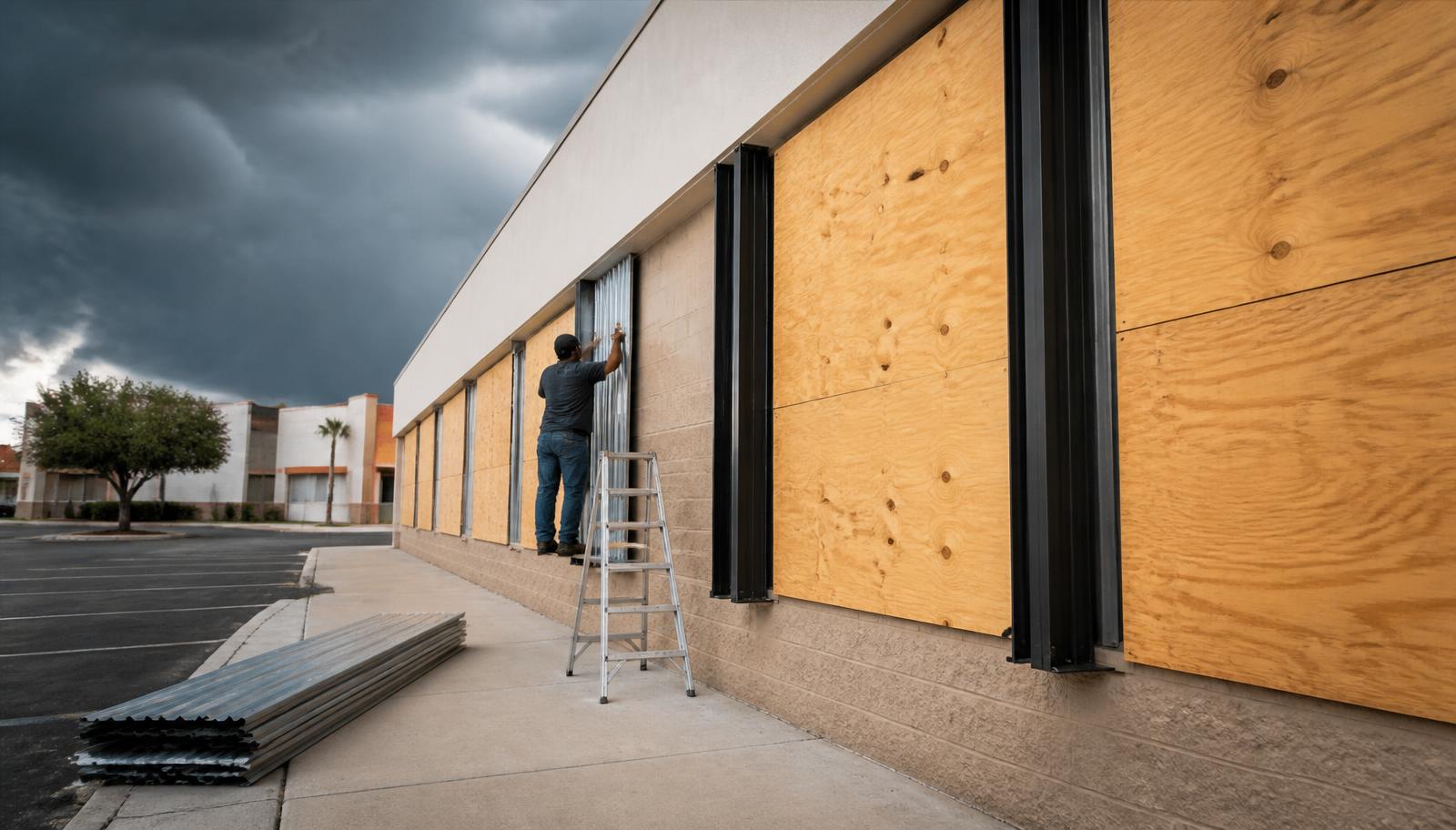
| Stabilization | Stop damage progression | Containment, board-up, temporary roof, drying plan |
| Scope | Define permanent repair work | Line-item scope, schedule, phasing plan |
| Reconstruction | Rebuild and reopen | Permits, construction, inspections, closeout |
How long does large-loss drying and reconstruction take?
Under IICRC S500 practice, structural drying commonly runs about three to five days for Class 1–2 conditions and five to ten or more days for Class 3–4 or Category 3 situations; reconstruction ranges from roughly one week to 90 or more days depending on scope. Materials, humidity, contamination, access, and occupancy all move those ranges. Published timelines should be treated as planning ranges verified by daily monitoring, not promises.
Who coordinates the trades and the schedule?
A commercial general contractor should own the schedule, trade coordination, safety, permitting, and turnover so the owner is not managing a dozen separate vendors during a crisis. Large losses fail more often on coordination than on technical capability — drying crews, electricians, mechanical contractors, roofers, abatement specialists, and finish trades all compete for the same access windows.
When damage extends into structure or envelope, the work moves into full commercial reconstruction and structural repair under the same management team.
How is documentation handled for the claim?
Documentation should be continuous, organized by area, and built as the work happens rather than reconstructed afterward. That includes daily moisture logs, equipment counts, photographs, containment records, disposal records, access logs, and change documentation. Consistent records shorten review cycles with the adjuster and reduce disputes about what was found and when.
Coverage decisions belong to the carrier, adjuster, broker, or counsel. A contractor's role is accurate field documentation and a scope that can be reviewed line by line. CRG works alongside carriers, adjusters, and TPAs in that reviewable format.
How do occupied properties keep operating?
Occupied large losses are phased so unaffected areas stay usable while damaged areas are isolated. Hotels protect guest routes and room inventory, senior living communities protect resident access and care operations, healthcare facilities coordinate with infection-prevention leadership, and multi-family properties protect resident egress and unit access.
Phasing decisions should account for egress, air movement, noise, deliveries, security, and emergency access — and they should be communicated before work starts, not after residents or guests notice.
What drives cost on a large commercial loss?
Cost is driven by damage category, affected building systems, access difficulty, occupancy constraints, material lead times, and how much work happens outside normal hours. Secondary damage from delayed drying is one of the most avoidable cost drivers on a commercial claim.
- Category and class of water or contamination.
- Extent of mechanical, electrical, and life-safety damage.
- Structural and building-envelope involvement.
- Phasing, off-hours work, and temporary facilities.
- Long-lead materials and specialty equipment.
What should owners ask a large-loss contractor?
Ask how the contractor staffs, documents, sequences, and closes out projects of this scale — not just whether they have done one. Useful questions include who runs the schedule, how daily reporting works, how change orders are handled, how subcontractors are qualified, and how completed areas are released back to operations.
Related reading: emergency commercial wind damage repair in Florida and the hurricane readiness plan for property managers.
Where does CRG operate on large losses?
Coastal Reconstruction Group is a commercial general contractor headquartered in Longwood, Florida, working across Central Florida, Tampa, Orlando, South Florida, the Panhandle, Georgia, the Carolinas, Alabama, Tennessee, and the wider Southeast, and licensed in 32+ states. Emergency response is one of five core capabilities alongside occupied renovation, capital improvements, adaptive reuse, and reconstruction.
To plan ahead of a loss or mobilize on an active one, contact the CRG team.
Frequently asked questions
What is the difference between mitigation and reconstruction?
Mitigation stops damage from spreading — extraction, drying, containment, and temporary protection. Reconstruction restores the building through permitted repair, systems work, finishes, inspections, and turnover.
Can a commercial building stay open during a large loss?
Often partially. Unaffected areas can frequently remain in use when construction zones are isolated and egress, air, and access are controlled, but some scopes require closure of specific areas.
Who decides when the building can reopen?
Reopening depends on life-safety conditions, authority requirements, utilities, and the owner or operator's decision based on professional assessments — not on the contractor alone.
How soon should a contractor be involved?
As early as possible. Early involvement improves stabilization, documentation quality, scope accuracy, and schedule certainty, and it reduces avoidable secondary damage.