A hurricane readiness plan for commercial property managers should connect prevention, people, documentation, vendor coordination, building protection, and post-storm recovery. In the Southeast, planning must account for hurricane season from June 1 through November 30, but preparation should begin before a storm is forming. The most effective plan turns scattered maintenance tasks into assigned actions with dates, contacts, and records.
What should a commercial hurricane readiness plan include?
A complete plan should cover contacts, critical systems, exterior protection, water intrusion points, tenant communication, documentation, supplies, vendor access, and post-storm decision-making. The plan should identify who is responsible for each action and when it must be completed. A generic checklist without ownership is difficult to execute under pressure.
- Emergency contacts and escalation authority.
- Building systems and critical equipment inventory.
- Roof, envelope, doors, windows, and drainage inspection.
- Loose-object, rooftop, and exterior-area securing.
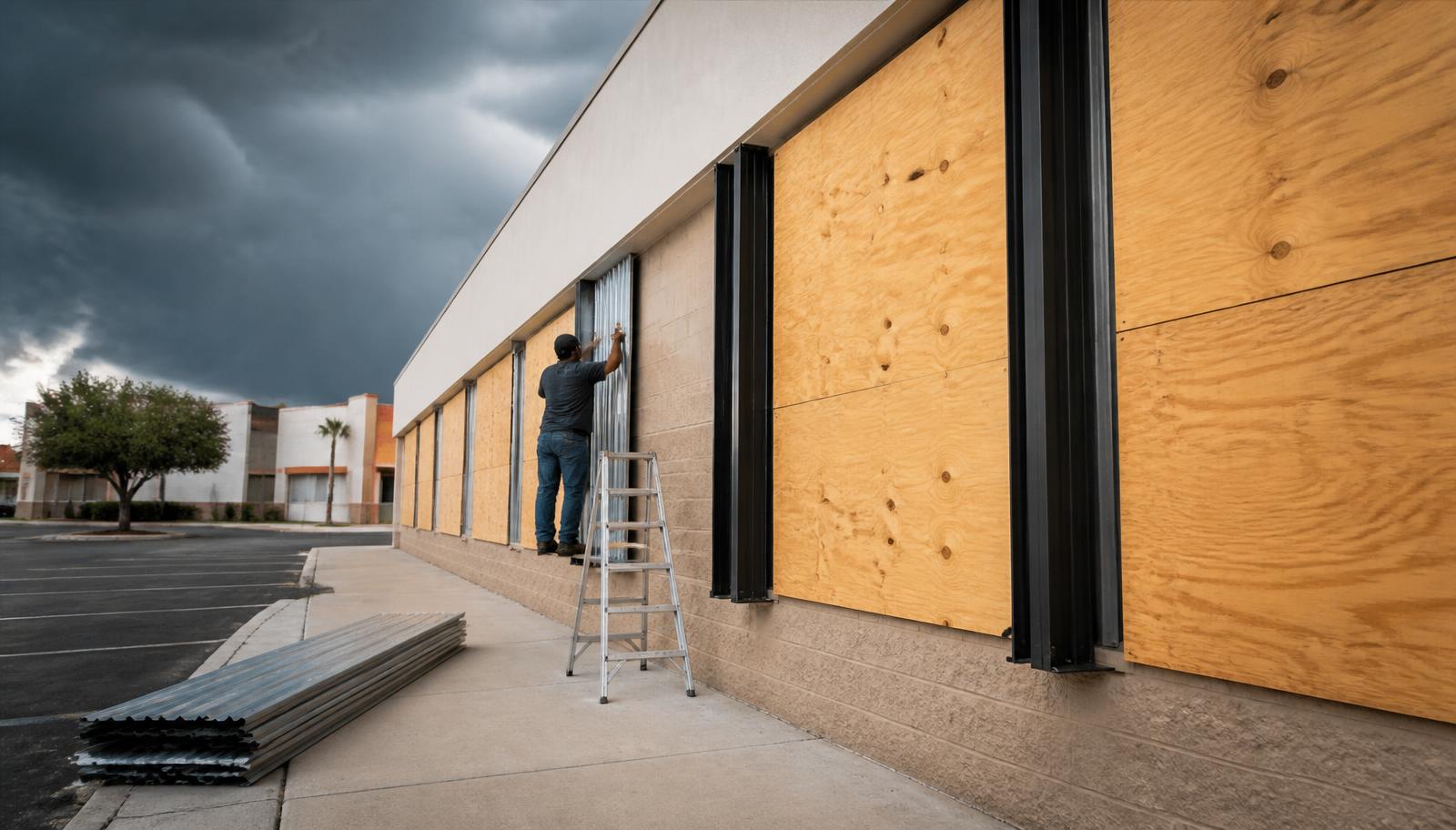
- Shutter, panel, barricade, and temporary-protection plan.
- Tenant, resident, guest, staff, and vendor communication tree.
- Photos, inventories, leases, drawings, and insurance documentation.
- Fuel, power, water, security, and access contingencies.
- Post-storm inspection, stabilization, drying, and reconstruction workflow.
When should property managers start hurricane preparation?
Commercial hurricane preparation should begin well before June 1 and be refreshed before each season, with a second review when a specific storm threatens. Off-season preparation is the time to inspect roofs, clean drainage, review contracts, test communications, verify contact information, and identify long-lead protection materials.
During a threat, the team should focus on executing the pre-approved plan rather than inventing responsibilities. Conditions can change quickly, and local authorities may restrict access. The property manager should communicate what is known, what is pending, and when the next update will be issued.
How should commercial roofs and building envelopes be prepared?
Roof and envelope preparation should address drains, scuppers, flashings, penetrations, edge metal, rooftop equipment, windows, doors, and known leak locations. A roof inspection should not end with “looks good”; it should identify deferred items that could become active-water problems under wind and rain.
Florida Building Code requirements, wind-borne debris regions, local product approvals, and the building’s existing assembly may affect permanent repairs and temporary protection. Use qualified professionals for work at height and do not create unsafe conditions by rushing last-minute roof access.
For damage that occurs despite preparation, CRG provides commercial rapid response planning and storm and wind-damage restoration coordination.
What should be documented before a storm?
Property teams should create time-stamped condition records of roofs, façades, windows, doors, equipment, common areas, tenant spaces, and critical contents before a storm. Photographs should be organized by location, not left in an unlabelled phone gallery. Keep copies of roof reports, maintenance records, warranties, leases, drawings, equipment schedules, and prior loss documentation where authorized.
Documentation supports faster triage and helps distinguish pre-existing conditions from storm-related damage. It does not guarantee an insurance outcome, and coverage questions should be directed to the owner’s broker, carrier, adjuster, or counsel.
How should managers secure a commercial property?
Property securing should prioritize life safety, the building envelope, rooftop and exterior equipment, drainage, critical utilities, and safe access. The plan may include approved shutters or panels, removal or anchoring of loose items, protection of openings, securing dumpsters, checking generators, and confirming equipment shutdown procedures.
Do not block required exits, fire access, ventilation, or emergency equipment. Work should be performed by qualified personnel and coordinated with the building’s operating procedures. Retail, hospitality, senior living, healthcare, office, and multi-family properties may require different protection and communication sequences.
What should tenant and occupant communication cover?
Communication should state what occupants must do, what the property team will do, when access changes, and where updates will be posted. Tenants and residents need practical instructions about windows, deliveries, parking, elevators, equipment, closures, and re-entry. Avoid promising that a property will reopen at a specific time before inspections support that conclusion.
For an occupied renovation or recovery project, clear communication remains important after the storm. A temporary route, drying area, or construction barrier can affect operations long after the weather clears.
How should a property manager plan for power and water loss?
Power and water contingencies should identify critical equipment, emergency power capacity, fuel arrangements, shutoffs, access needs, and vendor responsibilities. Managers should know which systems require a controlled shutdown and which must remain operating. Healthcare and senior living settings may have additional continuity requirements that must be coordinated with facility leadership.
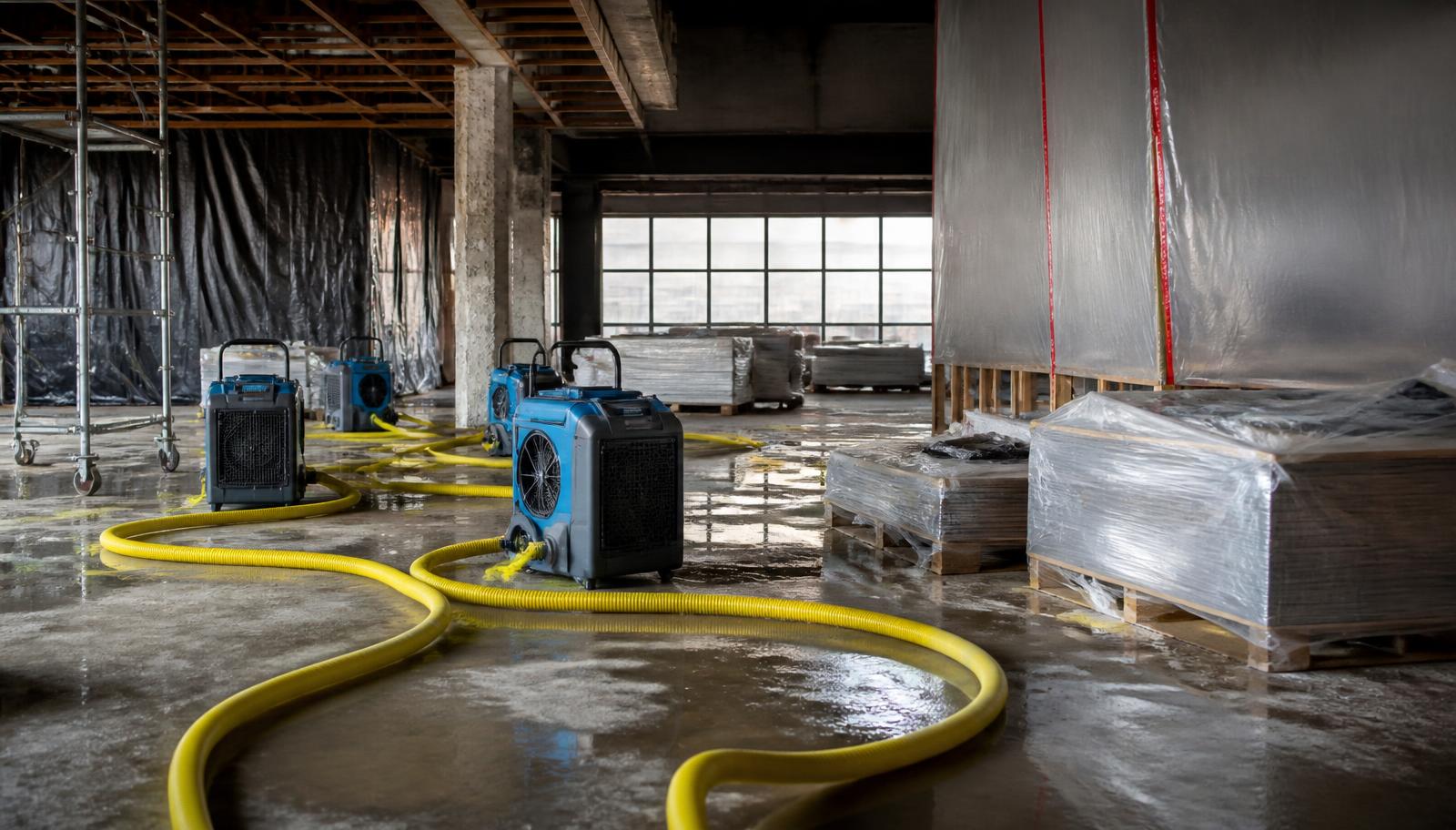
Water intrusion can create secondary damage when wet materials, humidity, and occupied conditions are not addressed promptly. The response plan should identify who can inspect, document, extract, dry, protect contents, and coordinate with the owner’s claim team.
What happens after a commercial hurricane?
Post-storm recovery begins with life-safety checks, controlled access, documentation, stabilization, water management, and a scope that separates emergency work from reconstruction. Do not allow occupants into areas with structural, electrical, environmental, or falling-object hazards. The first inspection should identify immediate controls and the next qualified trade or professional needed.
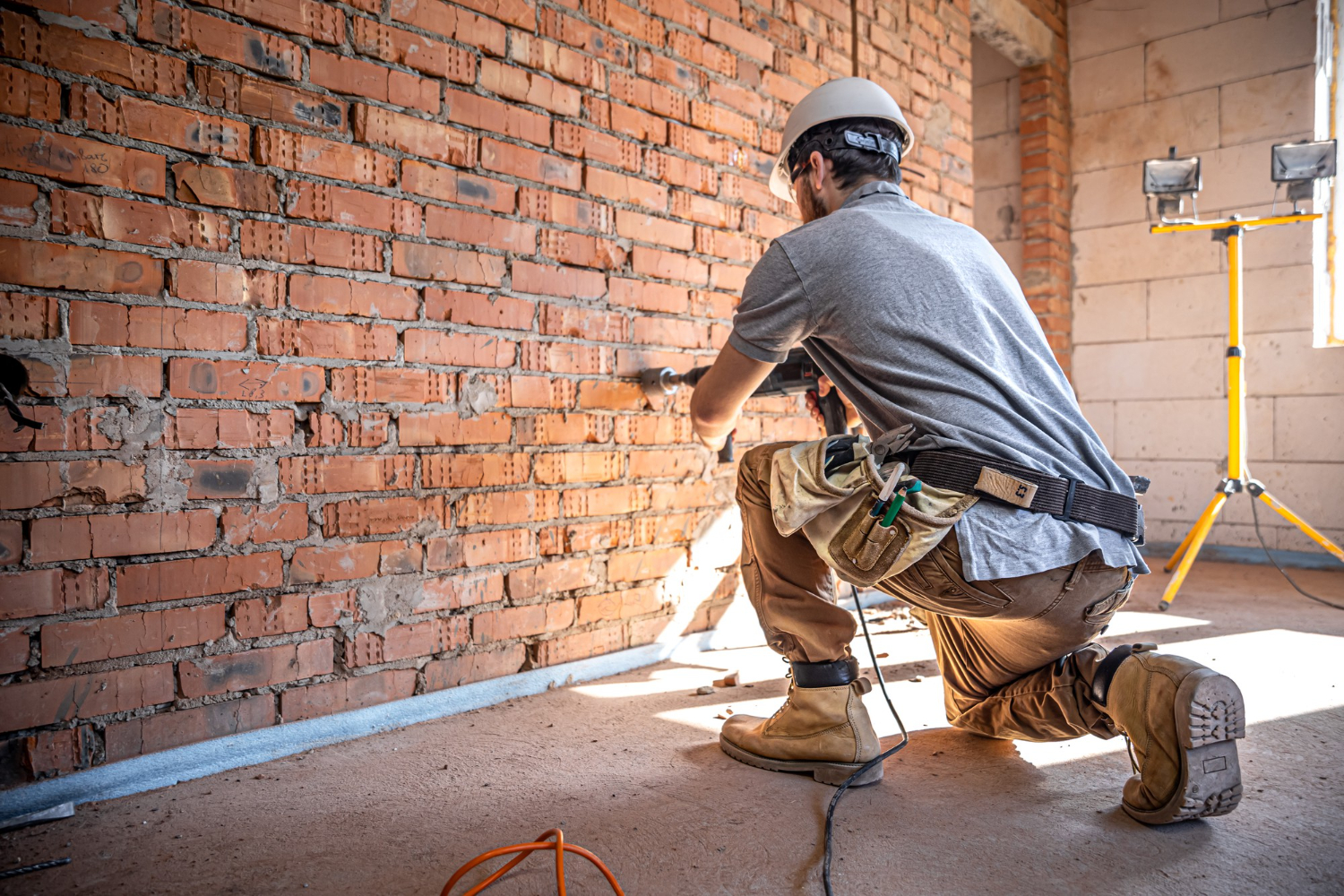
Water extraction and drying decisions should account for material type, contamination, humidity, air movement, and building use. Under IICRC S500 practice, drying commonly runs about three to five days for Class 1–2 conditions and five to ten or more days for Class 3–4 or Category 3 situations, while reconstruction can range from roughly one week to 90 or more days depending on scope. CRG can coordinate full commercial reconstruction when storm damage extends beyond temporary mitigation.
How do insurance records fit into hurricane readiness?
Insurance records are one part of readiness, alongside maintenance records, condition photographs, leases, inventories, and a clear chain of communication. Property teams should know who is authorized to report a loss and which records can be shared with the carrier or adjuster. Keep emergency invoices, photographs, drying documentation, temporary-repair records, and access logs organized after the event.
CRG’s commercial restoration work can support field documentation and coordination, but policy interpretation and coverage decisions belong to the appropriate insurance professionals. Review the related Florida commercial wind-damage article for additional context.
Who should own the hurricane readiness plan?
The property manager should own the plan, while facilities, ownership, tenants, vendors, security, insurers, and contractors each own assigned actions. The plan should be tested through a tabletop review before hurricane season and updated after every significant event or building change.
For a commercial property in Florida or the wider Southeast, start with a property-specific review rather than a generic internet checklist. Review CRG’s insurance and claims-support perspective, then contact Coastal Reconstruction Group to discuss storm readiness, restoration, or reconstruction needs.
Frequently asked questions
When is hurricane season in Florida?
Atlantic hurricane season runs from June 1 through November 30. Commercial property teams should prepare before the season and monitor official forecasts during an active threat.
Does a hurricane plan guarantee business continuity?
No. A plan reduces avoidable delays and improves coordination, but weather, authority restrictions, utility outages, building damage, and supply conditions can still affect operations.
Should a commercial roof be inspected every year?
Inspection frequency should match the roof, exposure, age, maintenance history, and owner’s risk plan. A pre-season inspection and post-storm assessment are prudent for many Southeast properties.
Who decides whether a damaged commercial building can reopen?
Reopening depends on life-safety conditions, authority requirements, utilities, structural and building-system assessments, environmental conditions, and owner or operator decisions. No contractor should promise re-entry without the appropriate evaluations.