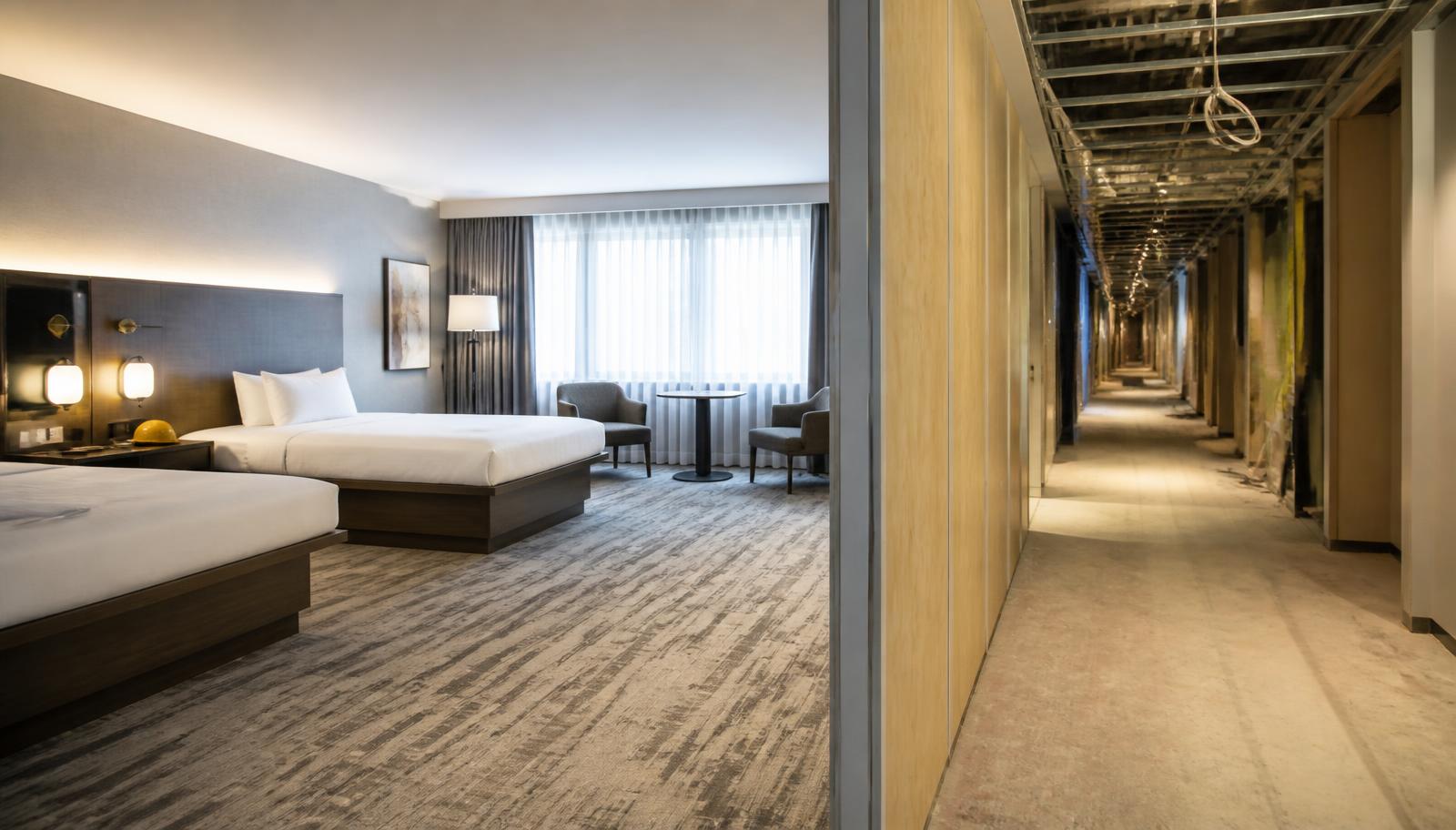
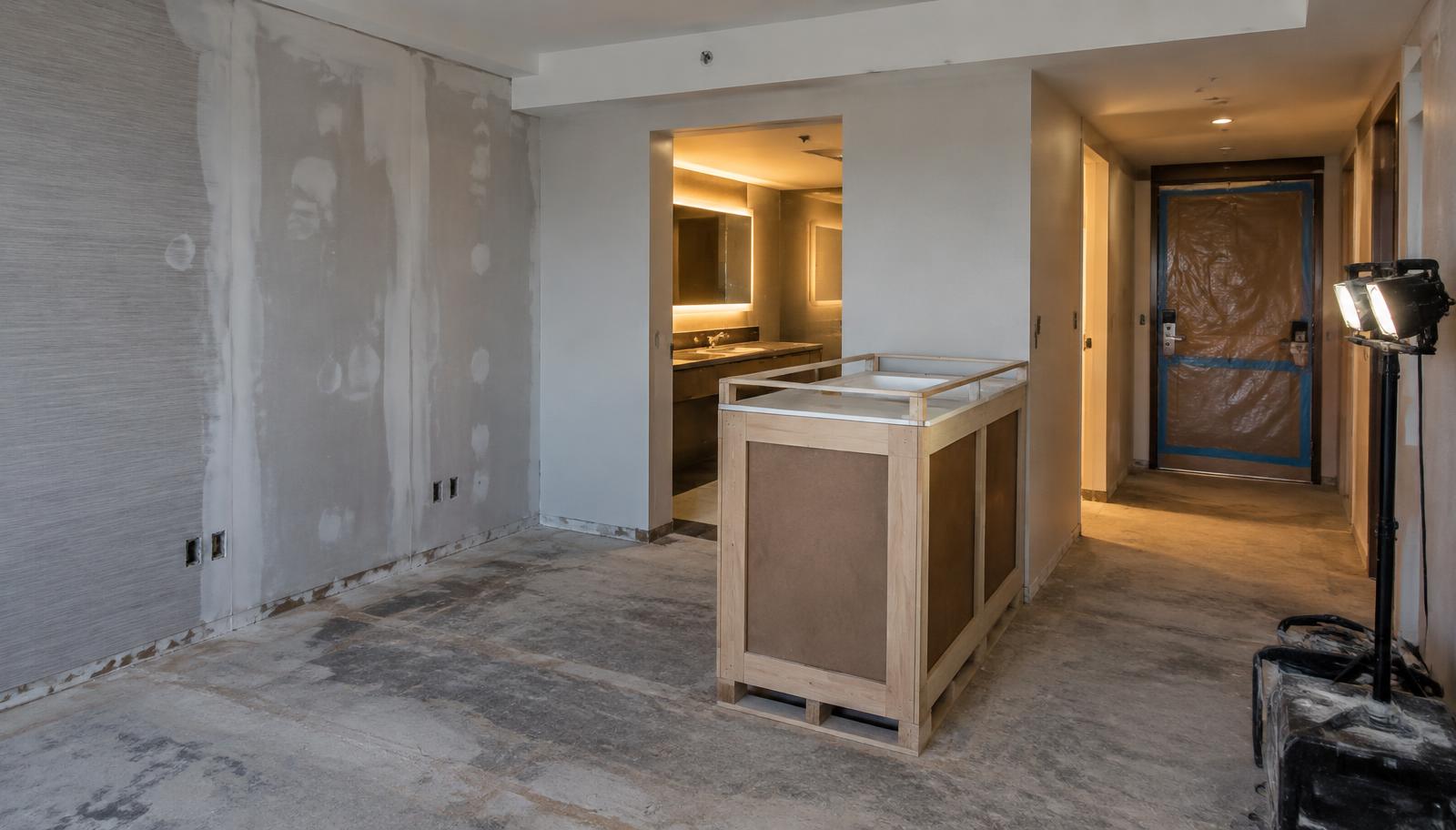
Hotel guest room renovation cost depends on how deep the work goes behind the walls, not only on the finishes a guest sees. A soft refresh of carpet, paint and furniture sits at one end of the budget, while a full room and bathroom renovation that opens plumbing, electrical and HVAC sits at the other. A guest room budget depends on four inputs: scope, room count, phasing and code triggers.
Quick answer: Renovating hotel guest rooms costs more with each layer of work that reaches past finishes into bathrooms, mechanical units and life safety devices, and the total shifts again with room count, brand standards and whether the property stays open. Coastal Reconstruction Group, a Southeast commercial general contractor whose work spans occupied renovations, capital improvements, adaptive reuse, reconstruction and emergency response, counts hotel owners and operators among the industries it serves.
What drives hotel guest room renovation cost?
Scope depth, the number of rooms in the program and whether the hotel stays open are the variables that move a guest room budget. Each additional layer of work pulls in more trades, more inspections and more time per room.
- Scope tier. A soft goods refresh, a case goods replacement and a full gut renovation are three different projects with different trade lists.
- Bathrooms. Converting tubs to showers, replacing vanities or relocating fixtures opens walls and floors, which brings in plumbing, waterproofing and tile.
- Building systems. PTAC (packaged terminal air conditioner) or fan coil replacement, lighting controls, outlets and USB charging, and fire alarm devices each add electrical and mechanical work.
- Room count and repetition. A program that repeats the same room type many times lets crews build a rhythm, while a building with many unique layouts loses that efficiency.
- Brand standards. Franchised hotels renovate to a brand standard, so the specification is partly set by the flag rather than the owner.
- Existing conditions. Hidden water damage, mold behind vinyl wallcovering or failed shower pans can only be priced once rooms are opened.
Soft goods vs. case goods vs. full renovation: how do the scopes differ?
The three scope tiers below differ in which building systems they touch. Knowing the tier before design starts keeps the estimate honest.
| Scope tier | Work included | Trades involved |
|---|---|---|
| Soft goods | Carpet, drapery, bedding, wallcovering, paint, lighting fixtures | Flooring, painters, FF&E installers |
| Case goods | Soft goods plus headboards, desks, dressers, nightstands, TV walls | Adds millwork and electrical for relocated outlets |
| Full renovation | Case goods plus bathroom demolition, new tile, fixtures, ceilings, HVAC units and life safety devices | Adds plumbing, mechanical, fire alarm, drywall and tile |
FF&E means furniture, fixtures and equipment, the movable items an owner may buy through a purchasing agent. Construction covers the fixed work a contractor builds. A clear line between the two avoids paying for the same item twice or for nobody to install it.
How does keeping the hotel open change the budget?
Renovating while the hotel operates adds cost in phasing, protection and lost room nights, while it can protect revenue that a full closure would give up. That tradeoff is worth settling before the room schedule is set.
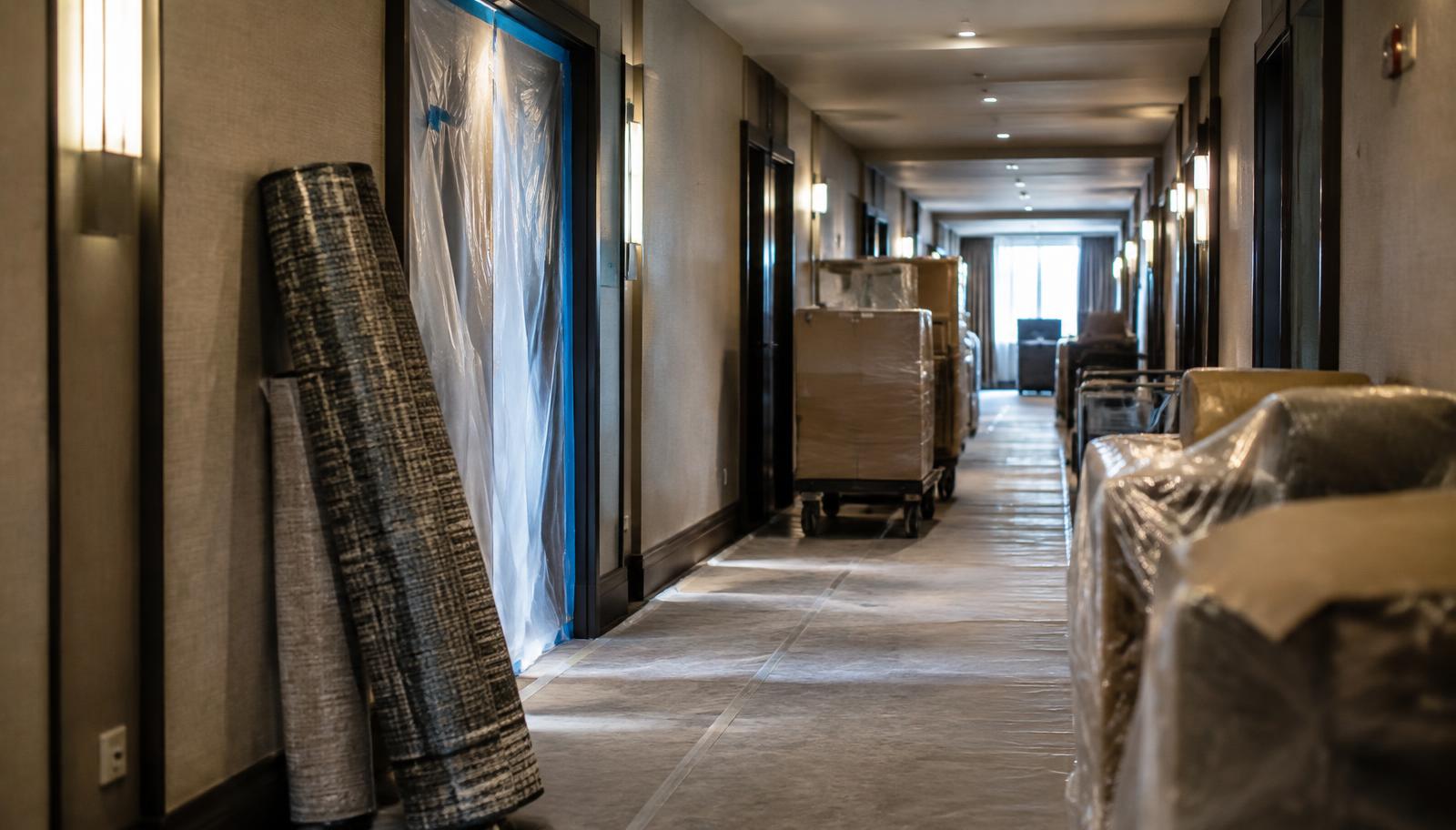
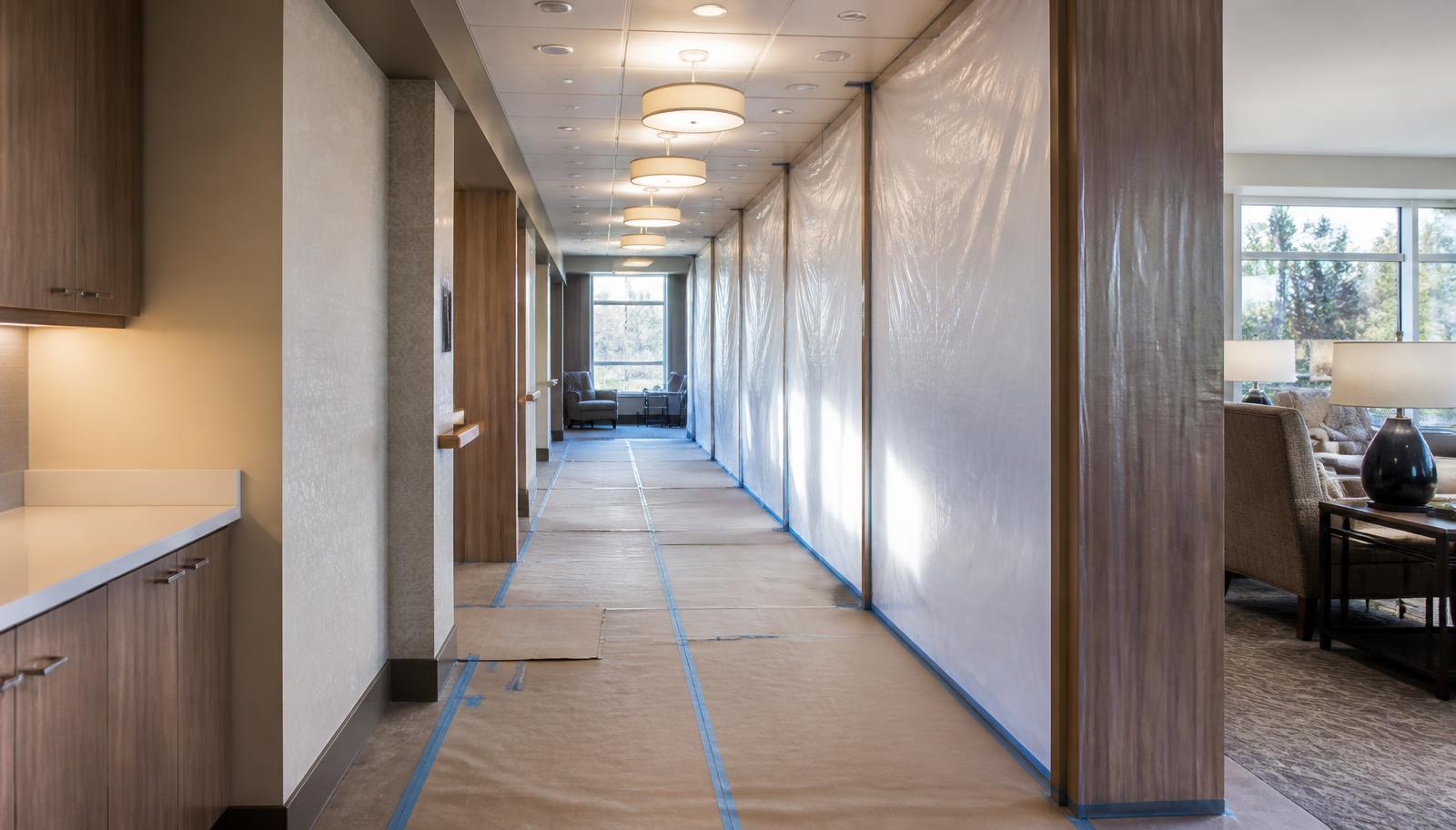
In an occupied program, rooms come out of inventory in blocks, for example a floor or a wing at a time. Each block needs dust and noise control, protected corridors and elevators, and a turnover plan so housekeeping can return finished rooms to sale. Our article on phasing an occupied hotel renovation walks through how those blocks are planned. A shorter block cycle returns rooms faster but needs more crews working at once.
Which code requirements can a guest room renovation trigger?
Altering guest rooms can trigger federal accessibility requirements, along with local building, fire and energy code review through the permit. Including them in the first budget avoids a scope change later.
Under the 2010 ADA Standards for Accessible Design, section 224.1.1 states that when guest rooms are altered or added, the accessible room requirements apply to the rooms being altered until the property reaches the number required for new construction. The same standards explain that the required count in an alteration is based on how many rooms are altered, not the total in the building. A renovation of several floors can therefore require new rooms with mobility features and communication features, and those rooms carry their own bathroom layouts and fixtures. ADA compliance work is one of Coastal Reconstruction Group's renovation services.
How do PIPs affect guest room renovation cost?
A property improvement plan can set both the scope and the deadline for a guest room program, which limits how much an owner can phase work over time. If a sale, conversion or franchise renewal is involved, the brand's list can drive the room specification. Our explainer on the hotel property improvement plan covers how those lists are written and negotiated.
How can an owner control guest room renovation cost?
Cost control works best before construction: a mockup room, an early contractor estimate and a firm decision on scope tier. A change made after rooms are opened affects every room still in the queue.
- Build a model room. Renovating one room first tests finishes, sequencing and installation details before they repeat across the property.
- Bring in the contractor during design. Under design-assist, the builder prices options while drawings are still flexible, which supports value engineering without cutting what guests notice.
- Open a sample of rooms early. Selective demolition in a few rooms reveals hidden conditions so the contingency reflects the actual building.
- Lock FF&E lead times. Late furniture or fixtures stall finished rooms, which keeps them out of inventory longer.
- Coordinate with operations. Housekeeping, engineering and the front desk need the block schedule so returned rooms sell without delay.
CRG works on renovations through design-assist and design-build delivery, and its full renovation scope covers systems, finishes and phased construction planning in occupied buildings.
Why does the contractor matter for a hotel room program?
A guest room program is repetitive, which means a small inefficiency in one room multiplies across every room in the scope. A contractor that has planned occupied hospitality work can sequence trades so each room moves through demolition, rough-in, inspection and finishes in a predictable rhythm. Founded in 1986, CRG is a family-owned firm with three generations of family leadership.
Next steps
Before asking for a number, decide the scope tier, gather the brand requirements and confirm whether the hotel will stay open. With those three answers in hand, start a conversation with Coastal Reconstruction Group or call (877) 708-5501 to build a phased estimate for your rooms.
Frequently asked questions
Is a hotel guest room renovation priced per room or per key?
Hotel budgets can be expressed per key, meaning per rentable guest unit, which makes properties of different sizes comparable. Per key figures hide differences in room size and type, so owners should also compare the mix of rooms when weighing estimates from different properties.
Does a soft goods refresh require a building permit?
It depends on the local jurisdiction and the exact work. Replacing carpet and furniture alone may not need a permit, while new light fixtures, electrical changes or bathroom work can bring in permit review. Your contractor should confirm requirements with the authority having jurisdiction before scheduling rooms.
Which states does CRG cover for hotel room programs?
The company is licensed in 32+ states. Its primary states are Florida, Georgia, Alabama, South Carolina, North Carolina and Texas. Headquartered in Longwood, Florida, it also keeps a regional presence in Texas for work across the region.
Should the contingency be larger for an older hotel?
An older building can hide unknowns behind its finishes, such as outdated plumbing or concealed moisture. Opening a few sample rooms before the bid is finalized gives the owner real conditions to price against, so the contingency is based on the building instead of a guess.